Detailed Analysis
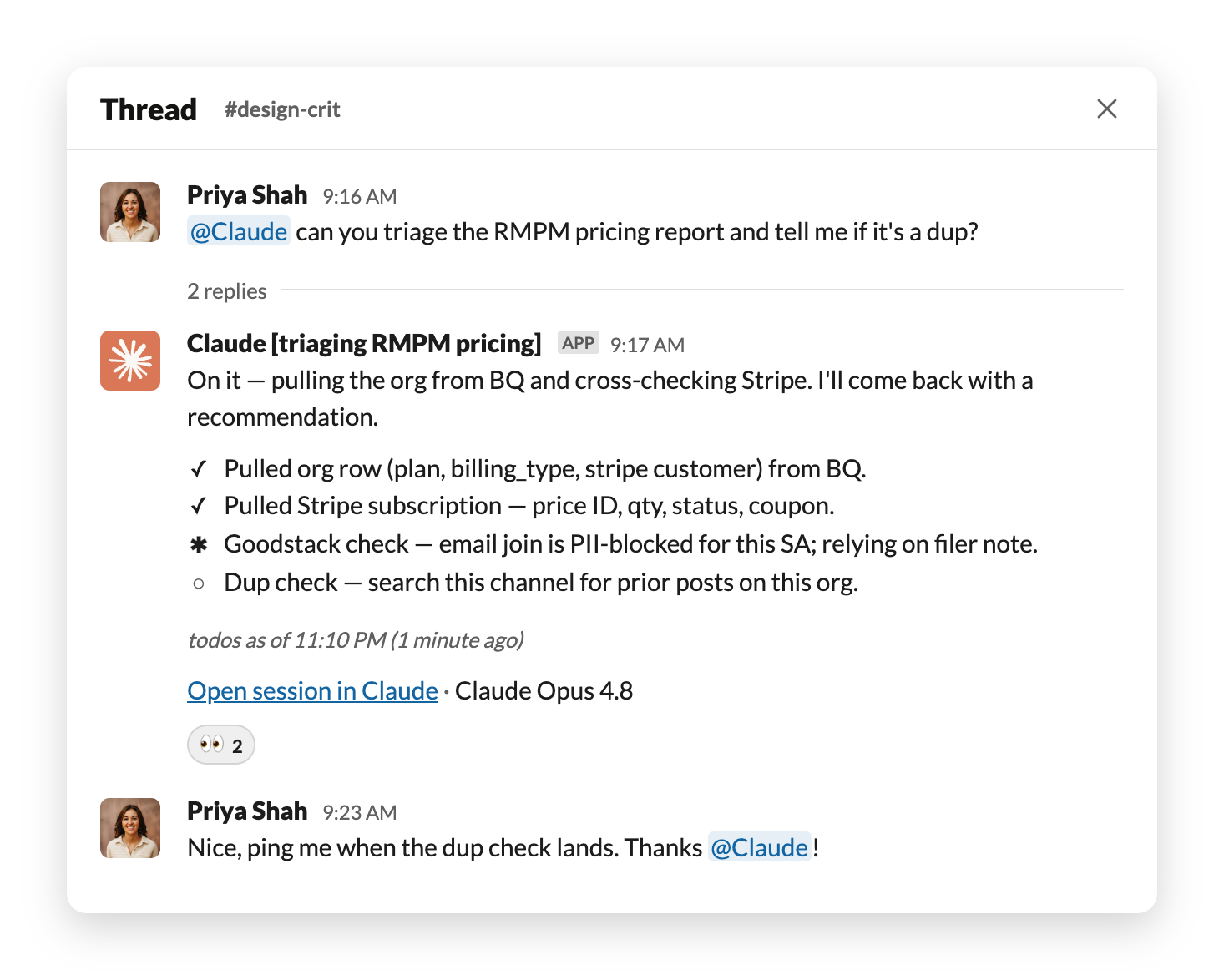
Anthropic has published a best-practices guide for deploying Claude as a collaborative team agent within workplace messaging environments, marking a significant evolution in how the company positions its AI system — not merely as a conversational assistant but as an autonomous, persistent team member capable of executing long-running tasks independently. The guide describes a version of Claude that operates under its own workspace account, reads channel history before receiving any explicit briefing, retains corrections and preferences over time, and continues working after users close their devices. This represents a fundamental shift from the familiar chatbox paradigm toward an agentic model in which Claude functions as an always-available, context-aware participant embedded in the channels where actual team decisions are made.
The guide's emphasis on transparency and collaboration distinguishes this deployment model from earlier AI workflow tools. By conducting work in public threads visible to all team members, Claude becomes a shared resource rather than an individual productivity aid, enabling any team member to redirect, correct, or build on an ongoing task. Anthropic frames this visibility as a feature rather than a constraint, noting that corrections made publicly in a channel accumulate into a form of institutional memory that continuously improves Claude's performance for that specific channel's work. The architecture also draws a careful boundary between private and shared context — what Claude learns in a DM stays there, while public channel knowledge propagates across the workspace — a design choice that reflects both privacy considerations and the practical need to prevent unintended data leakage.
The guide's framework for task delegation — requiring inputs Claude can reach, a clearly stated goal, and a verifiable result — reflects lessons from agentic AI deployment that have emerged across the industry, where underspecified tasks and inaccessible data have been primary failure modes. Anthropic's advice to start with small, contained tasks before escalating to scheduled autonomous workflows mirrors responsible deployment guidance from researchers and practitioners who have warned against giving AI systems broad autonomy before trust is established. The scheduling and proactive follow-up features described in the guide — where Claude posts weekly digests or checks back on whether a fix held — push Claude's role further into territory traditionally occupied by project management software or human coordinators.
These developments connect to a broader industry trajectory in which frontier AI labs are racing to embed their models into enterprise workflows as persistent agents rather than single-turn tools. Competitors including OpenAI, Google, and Microsoft have similarly pursued agentic integrations within productivity suites, but Anthropic's approach here emphasizes a gradual, user-controlled expansion of autonomy — from tag-triggered responses to scheduled independent actions — rather than defaulting to maximum proactivity. This calibrated stance aligns with Anthropic's stated commitments to safe AI deployment and reflects growing awareness among enterprise buyers that unchecked AI agency introduces operational and reputational risks. The guide's instruction to ask Claude directly what it can access before assigning a task is a small but telling detail: Anthropic is building user habits around verification and transparency that could prove foundational as agentic AI becomes standard in organizational settings.
 Read original article →