Detailed Analysis
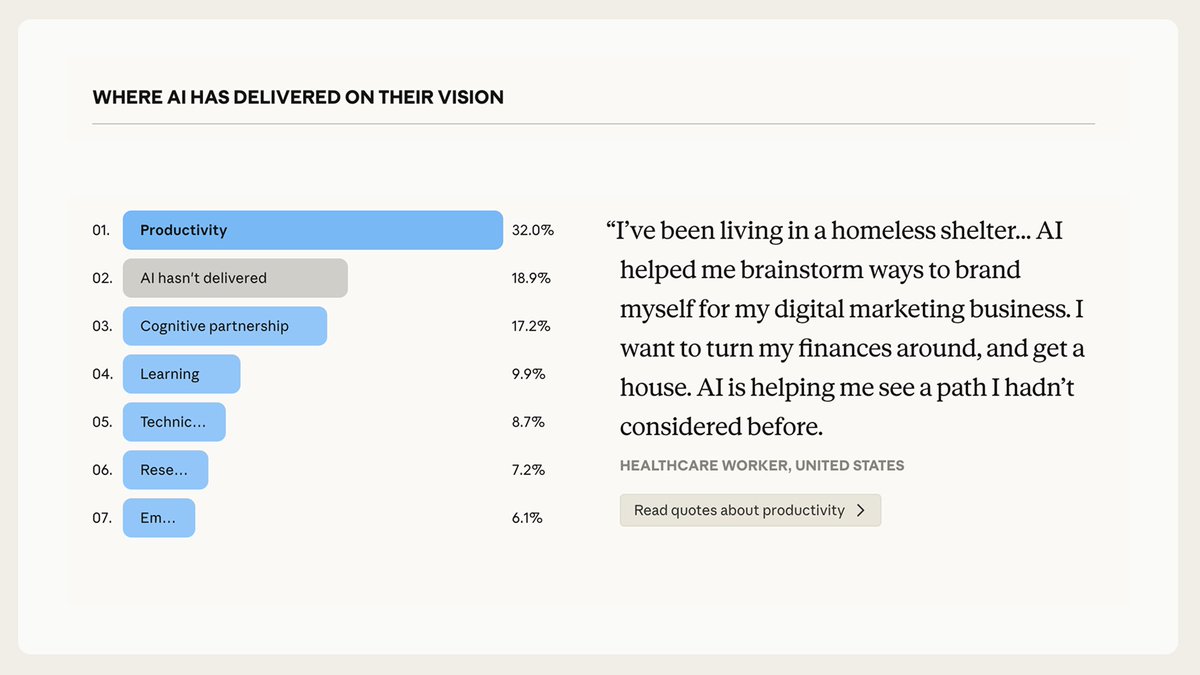
Anthropic's large-scale qualitative study of Claude users generated significant public attention in early April 2026, with the company reporting that 81,000 users responded within a single week — a figure the company described as the largest qualitative study of its kind. The central finding highlighted in Anthropic's own communications was that 81% of respondents agreed that AI had taken a meaningful step toward fulfilling a broader societal vision — one oriented around human flourishing, expanded opportunity, and personal growth. The study was characterized as drawing on deep qualitative interviews rather than simple surveys, capturing user hopes around themes such as financial freedom, more personal time, sharper professional output, and self-improvement.
The public reaction to the study was notably bifurcated. A segment of commenters welcomed the scale and ambition of the research, praising Anthropic for grounding its model development in real-world user sentiment rather than internal benchmarks alone. Some framed it as evidence that AI development was maturing beyond capability races toward genuine alignment with human needs. However, skepticism was also prominent: critics pointed out that the fears expressed — job loss, misinformation, and existential risk — are the same three anxieties that have dominated public AI discourse since at least 2022, suggesting the study may have confirmed what was already well-known rather than surfacing new insight. One commenter wryly noted that 81,000 is an even number, poking fun at the suggestion that no one had checked the parity of the respondent count before publishing — a small but telling sign of the scrutiny major AI companies now face over even minor presentational details.
Woven throughout the replies is a pronounced thread of user frustration with Anthropic's recent product and pricing decisions that existed in sharp tension with the optimistic framing of the study. Multiple paying subscribers — including Max and Pro tier users — complained bitterly about usage limit reductions, hard stops that block even basic chat functionality, and what several described as a bait-and-switch dynamic where premium plans were sold and then quietly restricted. One user cited Claude Code Pro limits being exhausted within one to two days; another described a recent shift in April 2026 that excluded third-party app integrations from higher-tier plans as a strategic misstep likely to deter developers from building Claude-dependent business workflows. Several users also reported unresolved billing disputes involving unauthorized charges, with support tickets going unanswered for days — a customer service gap that cut against the study's narrative of Anthropic as a company deeply attuned to user wellbeing.
The episode illustrates a broader tension facing frontier AI developers: the gap between aspirational research framing and the lived product experience of paying customers. Anthropic's study signals a genuine investment in understanding what users want from AI at a civilizational scale, yet the simultaneous wave of complaints about usage caps, pricing restructuring, and unresponsive support undermines the credibility of that posture. In the competitive landscape of 2026, where OpenAI, Google, and others are aggressively iterating on model capabilities and pricing structures, Anthropic's differentiation through safety-focused, human-centered development depends heavily on operational trust — trust that appears strained among a vocal segment of its own user base. The contrast between the 81% optimism figure and the volume of cancellation threats in the same reply thread serves as a reminder that survey sentiment and customer retention are related but distinct metrics, and that the latter may be the more consequential indicator of whether Anthropic's vision translates into durable market position.
 Read original article →