Detailed Analysis
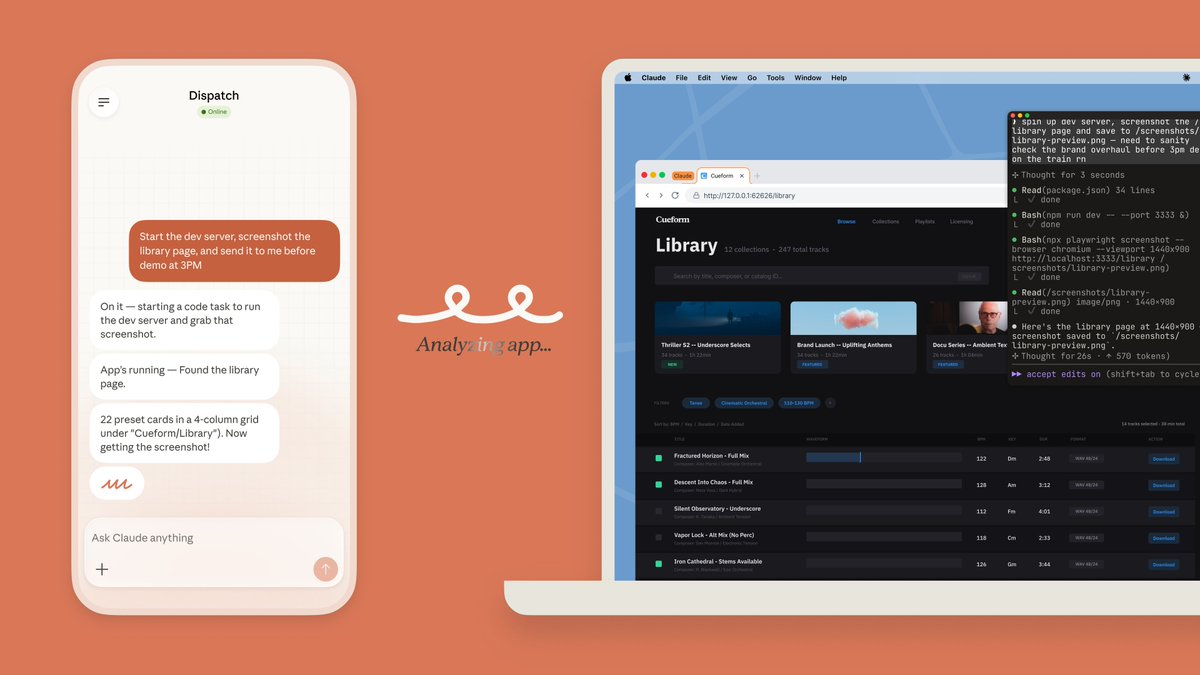
Anthropic's Claude platform has announced expanded agentic capabilities that allow users to assign tasks from a mobile device and return to completed work on a desktop, marking a significant shift in how the AI assistant is positioned — from a conversational tool to an autonomous background worker. The core features highlighted include persistent, scheduled task execution, such as scanning email every morning or generating reports on a weekly cadence, without requiring repeated user prompting. Additionally, the announcement references computer use functionality, wherein Claude can interact with desktop environments by taking screenshots and controlling mouse input, a capability currently limited to macOS with Windows and Linux support notably absent — a friction point that generated substantial user frustration in the reply thread.
The public response to the announcement was sharply bifurcated. A segment of users expressed genuine enthusiasm, with some noting they had already configured similar workflows independently — running Claude Code in the cloud and directing it via Telegram for overnight research and email drafting. This real-world adoption validates the product direction. However, an equally vocal contingent used the announcement thread to surface serious grievances: unauthorized credit card charges, unresponsive customer support, unexplained revocations of paid Max plan access, and persistent usage limit problems that rendered high-tier subscriptions functionally unusable. Several users reported being charged hundreds of dollars without authorization and waiting more than ten days without a support response. These complaints signal a significant operational gap between the ambition of Anthropic's product roadmap and the reliability of its billing and customer service infrastructure.
The philosophical dimension of the announcement did not go unnoticed in the thread. Multiple commenters observed that the transition from Claude as a text-generation tool to Claude as an entity capable of operating a full computing stack — navigating UIs, controlling hardware inputs, and executing multi-step autonomous workflows — represents a categorical leap that has occurred within roughly two years. The observation that "the people who said AI would never be autonomous are eating their words" reflects a broader industry reckoning with the pace of capability development. The trust question raised by several users — who owns the miss when an autonomous agent acts incorrectly, and how users can audit what the system touched or changed — is one of the central unsolved challenges in agentic AI deployment, and the thread's organic surfacing of this concern illustrates how quickly that question moves from theoretical to practical once real autonomy is on offer.
The platform availability gap — macOS only, with no confirmed timeline for Windows or Linux — is strategically notable given that enterprise and developer environments skew heavily toward Windows and Linux systems. Anthropic appears to be iterating in a controlled rollout pattern, but the exclusion of dominant workplace operating systems limits the professional utility of the agentic features in the near term. The enthusiasm from users already running custom cloud-based Claude Code pipelines suggests that technically sophisticated early adopters are outpacing the official product surface, finding workarounds that approximate the announced functionality through their own infrastructure. This dynamic — users building ahead of official tooling — is characteristic of rapidly developing AI platforms where capability outstrips polished delivery. Anthropic's challenge in the coming months will be closing both the platform compatibility gap and the customer trust deficit exposed by the billing and support complaints that dominated an announcement thread intended to showcase a new frontier in AI autonomy.
 Read original article →