Detailed Analysis
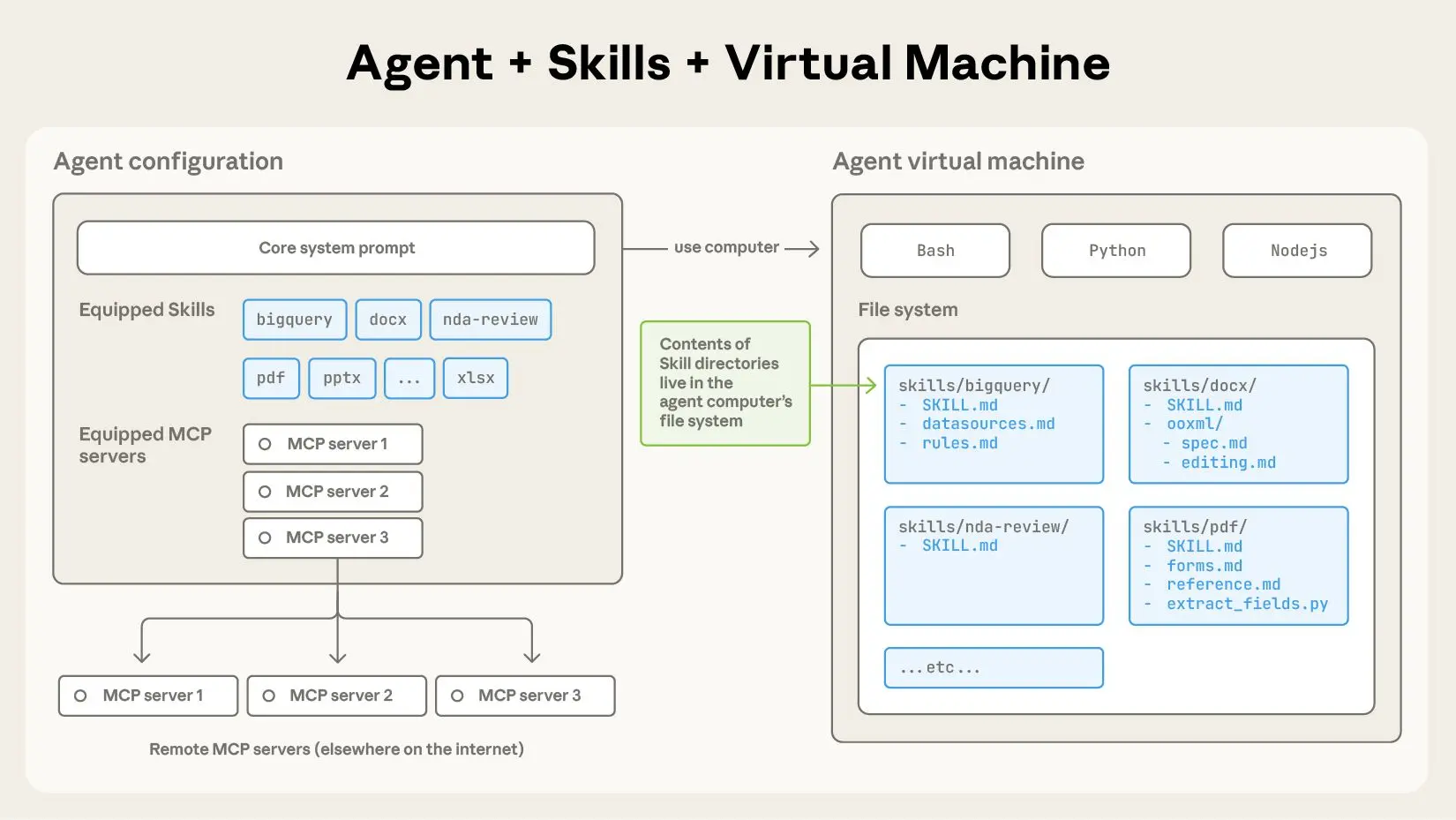
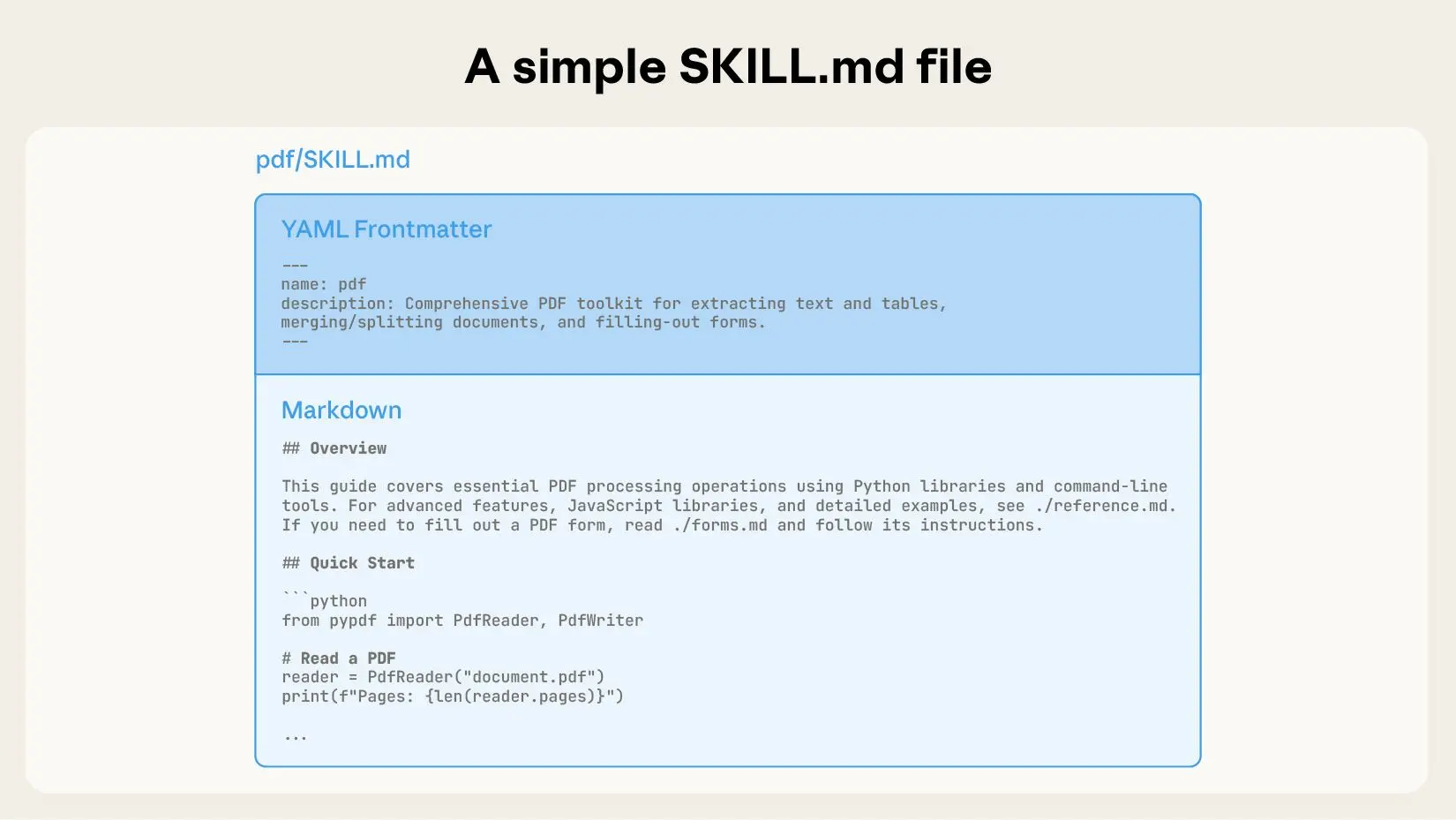
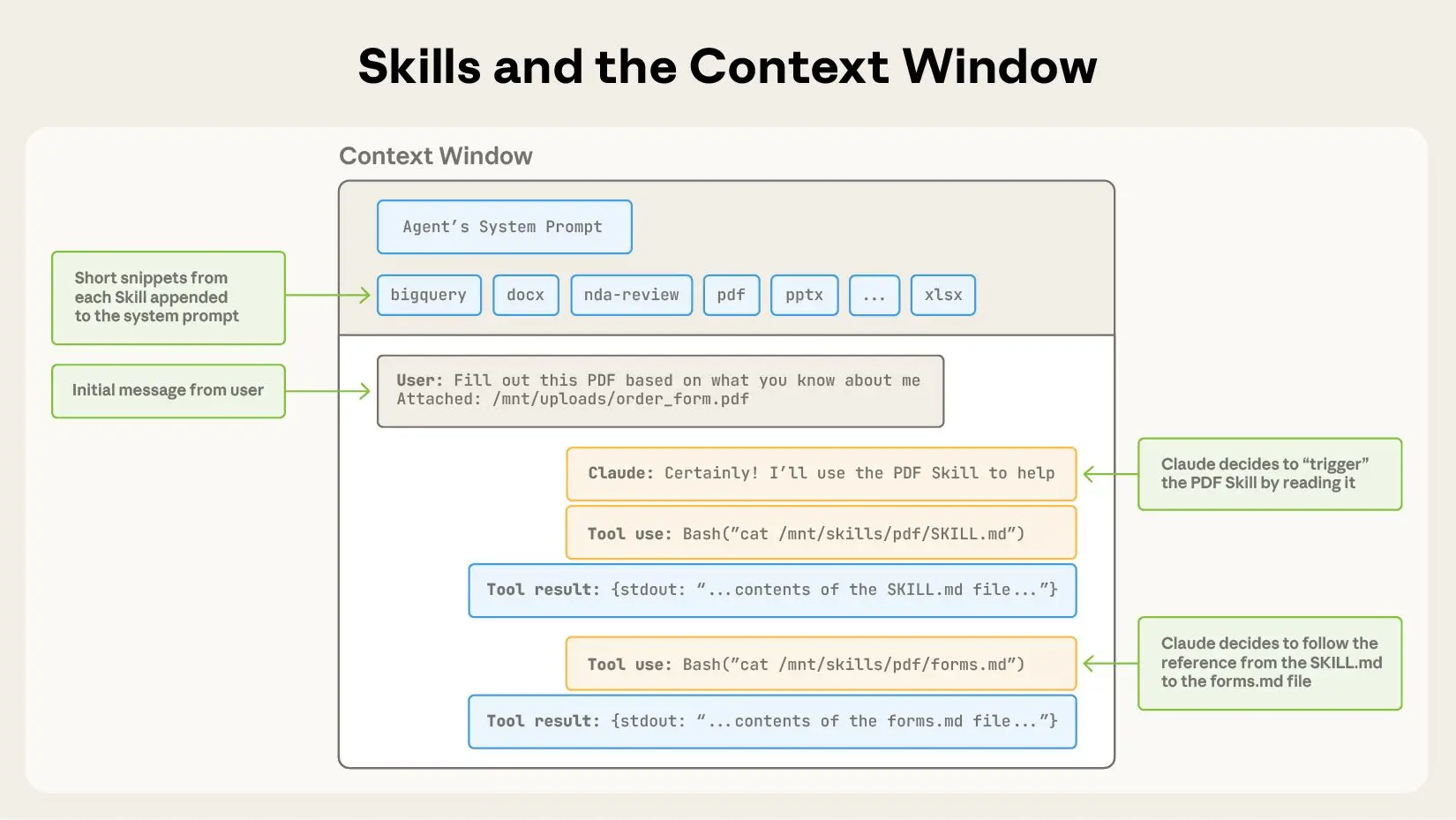
Anthropic has introduced Agent Skills, a modular architecture designed to equip AI agents like Claude with domain-specific expertise through organized, dynamically loadable packages of instructions, scripts, and resources. Each skill is structured as a directory anchored by a SKILL.md file containing YAML frontmatter metadata — a name and description — that is pre-loaded into the agent's system prompt at startup. The full body of the skill, along with any bundled supplementary files, is only retrieved when Claude determines the skill is relevant to the task at hand. This architecture allows agents to function effectively without saturating their context windows with irrelevant information, making the total amount of expertise that can be packaged into a skill effectively unbounded. Anthropic released the format as an open standard in December 2025, signaling an intent for the architecture to extend beyond its own platforms.
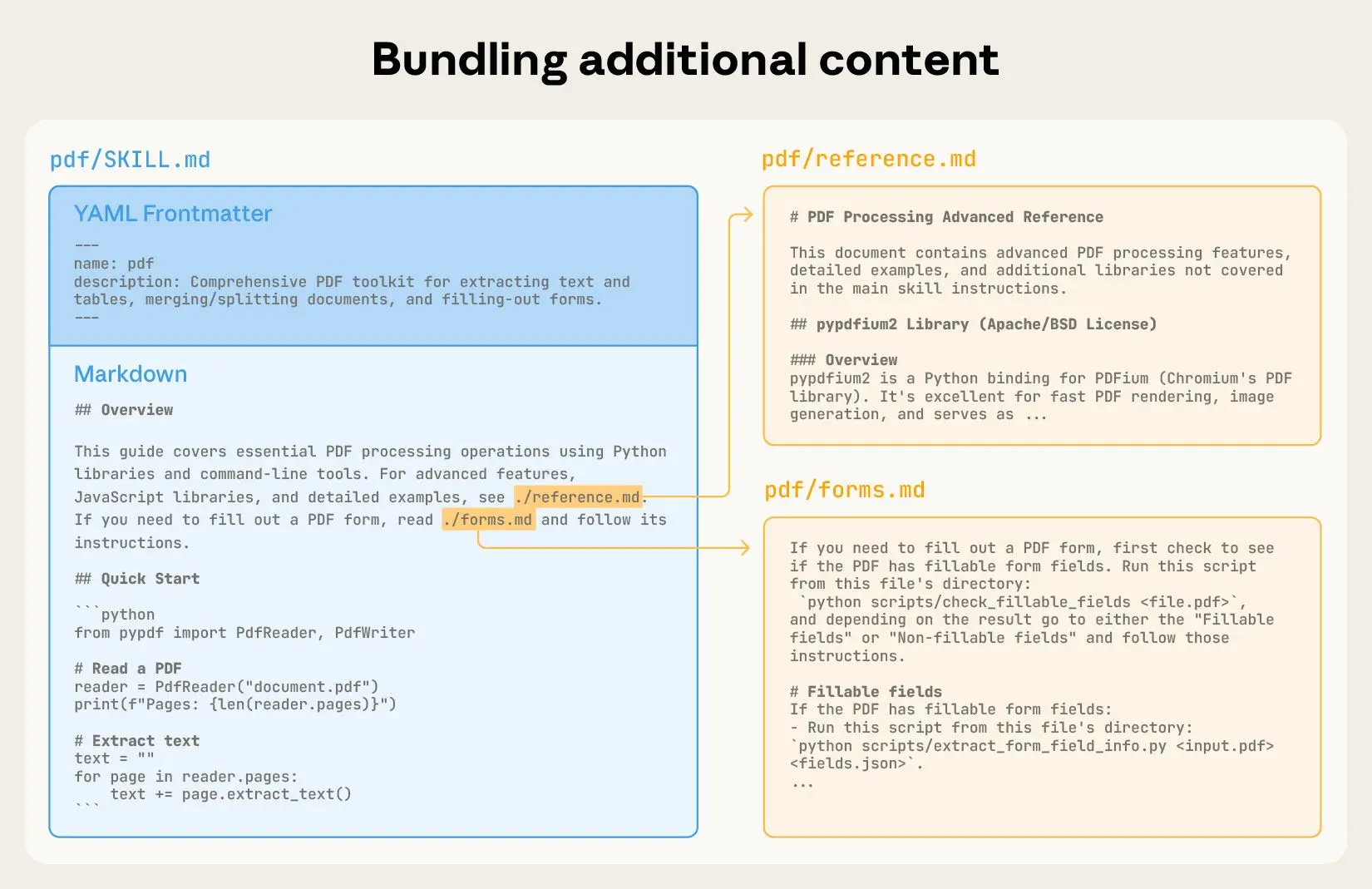
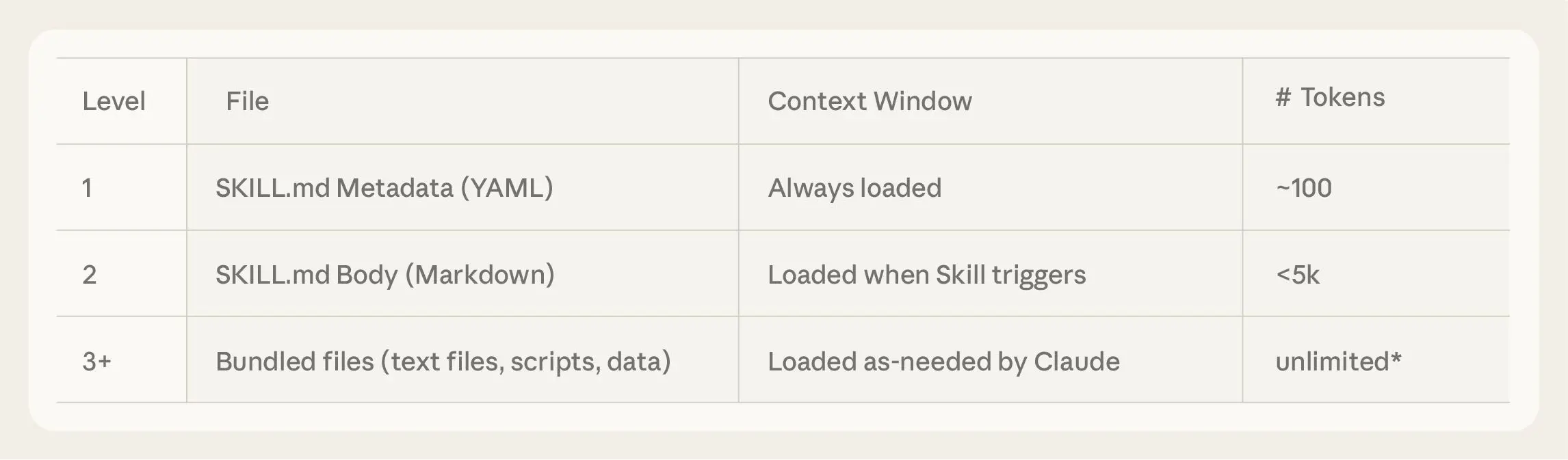
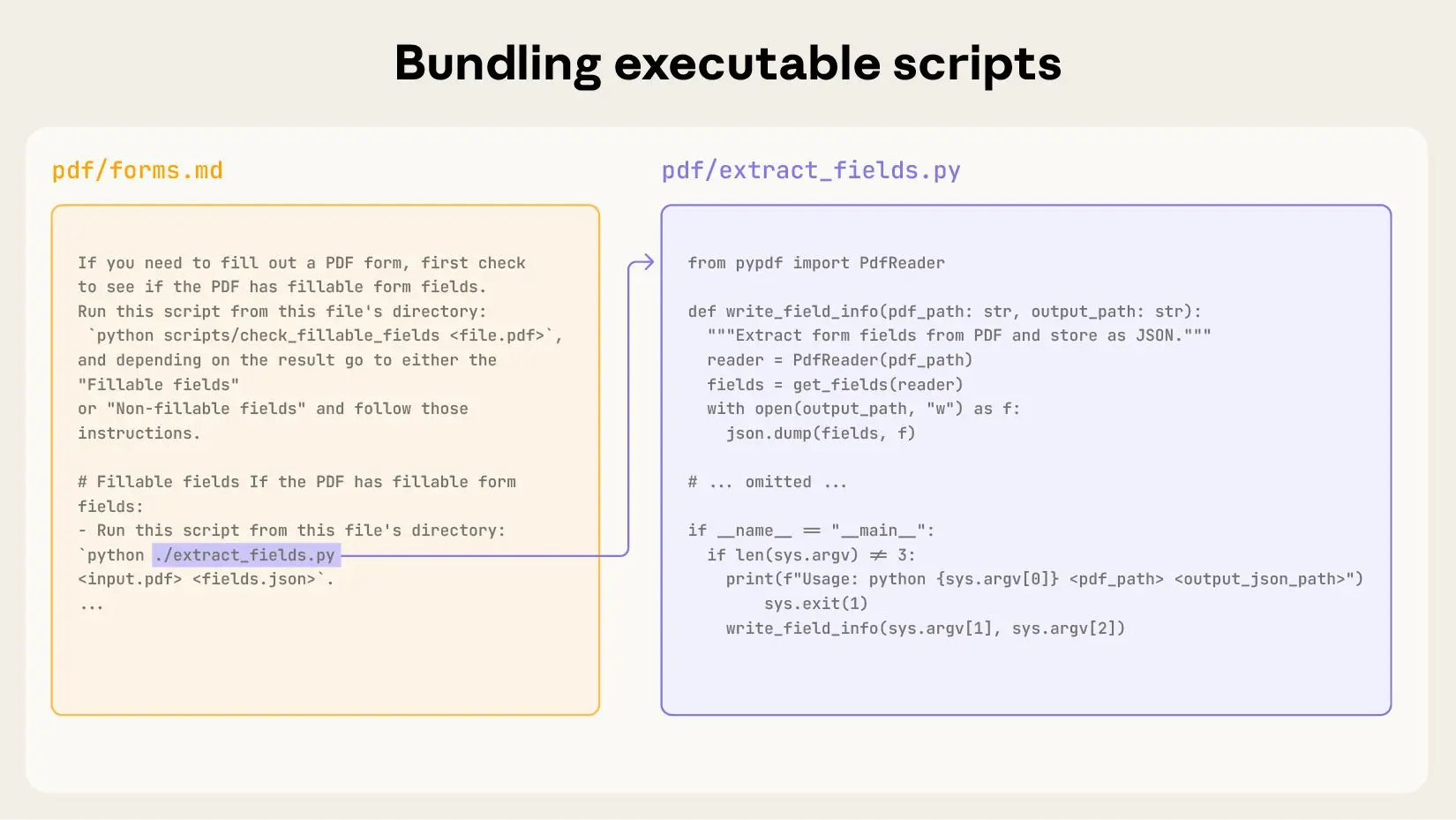
The central design principle underpinning Agent Skills is progressive disclosure — a hierarchical information-loading strategy borrowed from technical documentation design. At the first level, only lightweight metadata (consuming roughly 30–50 tokens per skill) enters the system prompt. At the second level, Claude reads the full SKILL.md body when the task context warrants it. At deeper levels still, Claude navigates linked files within the skill directory as needed. A concrete example involves a PDF skill that bundles a separate forms.md file: the core SKILL.md remains lean, and Claude only loads the form-filling instructions when that specific operation is required. Skills can also include executable Python scripts, offloading deterministic or computationally intensive tasks — such as extracting form fields from a PDF — from token-based generation to traditional code execution, improving both reliability and efficiency.
The practical implications of Agent Skills extend significantly beyond individual productivity. By framing skill-building as analogous to writing an onboarding guide for a new hire, Anthropic positions domain experts — not just engineers — as potential skill authors, democratizing the specialization of AI agents. Skills are composable: multiple skills can be combined to execute complex, multi-step workflows, such as pairing a spreadsheet skill with a watermarking skill for document production pipelines. They are also shareable across repositories, enterprise settings, and developer platforms, enabling organizations to institutionalize procedural knowledge in reusable, version-controlled form. This composability directly addresses a persistent challenge in enterprise AI deployment, where fragmented, bespoke agent configurations for each use case have created maintenance overhead and limited scalability.
Agent Skills represents a meaningful architectural evolution in how capable AI systems are deployed in real-world environments. The distinction Anthropic draws between skills, tools, and subagents clarifies a maturing taxonomy in agentic AI design: tools and Model Context Protocol servers provide data access, subagents handle fixed-role task delegation, while skills teach reusable workflows and encode procedural expertise. This differentiation reflects growing sophistication in the field about how to structure multi-component AI systems for reliability and reuse. The release of Agent Skills as an open standard — already adopted beyond Anthropic according to the agentskills.io initiative — mirrors patterns seen in earlier infrastructure layers like MCP, suggesting Anthropic is pursuing a strategy of establishing interoperability standards rather than proprietary lock-in, a move with potentially significant consequences for how the broader industry converges on agentic architectures.
 Read original article →