Detailed Analysis
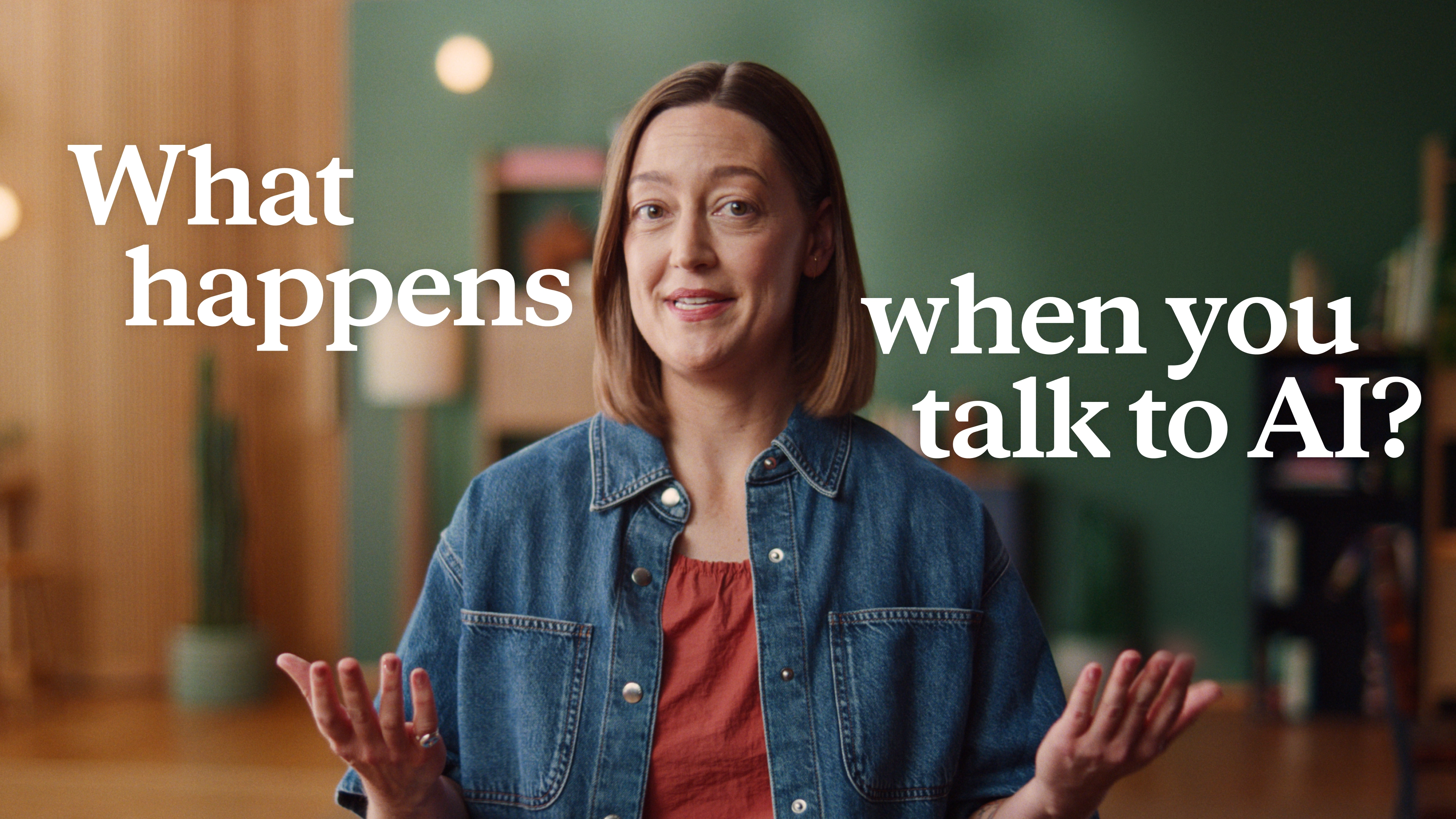
Anthropic's video explainer "What Happens When You Talk to AI?" addresses a deceptively simple question that underlies most public confusion about large language models: what actually occurs during the brief pause after a user hits send and before Claude begins generating a response. The piece is positioned as an educational resource rather than a product announcement, part of Anthropic's broader push to demystify the mechanics of generative AI for a general audience. Its central claim—that models predict text one word (or token) at a time, but do not "think" one word at a time—gets at a distinction that even technically literate users often blur: the surface-level autoregressive output process versus the internal computation that produces each token.
This distinction matters because it directly counters two common misreadings of AI behavior. The first is the anthropomorphic assumption that a chatbot is deliberating in real time the way a person would, forming an idea and then translating it into words. The second, more skeptical misreading, is that because the model is "just predicting the next word," its outputs are shallow statistical tricks with no meaningful structure behind them. Anthropic's framing threads between these views: prediction is the mechanism, but the process that generates each prediction draws on a much richer internal representation shaped by training across massive datasets, rather than any simple lookup or word-by-word chaining. Helping users understand this nuance is directly relevant to how they interpret and calibrate trust in model outputs—recognizing hallucinations, understanding why phrasing changes can alter results, and avoiding both over-trust and dismissiveness.
The publication of this material fits into a broader pattern of AI labs investing in interpretability and public education as parallel tracks to capability development. Anthropic in particular has built its identity around interpretability research, including mechanistic interpretability work aimed at understanding what happens inside transformer models at the level of features and circuits. A consumer-facing video that translates these ideas into accessible language serves a dual purpose: it builds general AI literacy while reinforcing Anthropic's brand positioning as the safety- and transparency-focused lab in a competitive field that includes OpenAI, Google DeepMind, and others racing primarily on benchmark performance.
More broadly, this kind of content reflects an industry-wide recognition that as AI tools become embedded in everyday work and communication, the gap between public understanding and actual model behavior has real consequences—for trust, for appropriate reliance, and for policy discussions about regulation. As chatbots are increasingly used for consequential tasks like coding, research, and decision support, resources that explain prediction, context windows, and the absence of persistent "thought" between turns help set more realistic expectations. This tutorial-style content also signals a maturing phase for the AI industry, where companies are shifting some effort from pure capability marketing toward helping users become more sophisticated consumers of AI-generated text, a shift likely to continue as models grow more capable and more widely adopted across non-technical audiences.
 Read original article →