Detailed Analysis
Anthropic's claude.ai platform has formalized a dedicated tutorial resource explaining how "Skills" — a distinct feature within Claude Code — compares to and complements other developer-facing capabilities such as agents, hooks, and commands. The existence of this tutorial page, hosted under claude.com/resources/tutorials, signals that the Skills feature has matured to a point where Anthropic considers differentiation from adjacent features a meaningful user education priority. The page structure also reveals that Skills sits alongside a growing suite of integrations — including Claude for Chrome, Slack, Excel, and PowerPoint — indicating Anthropic is pursuing a broad surface-area strategy across professional and productivity tooling.
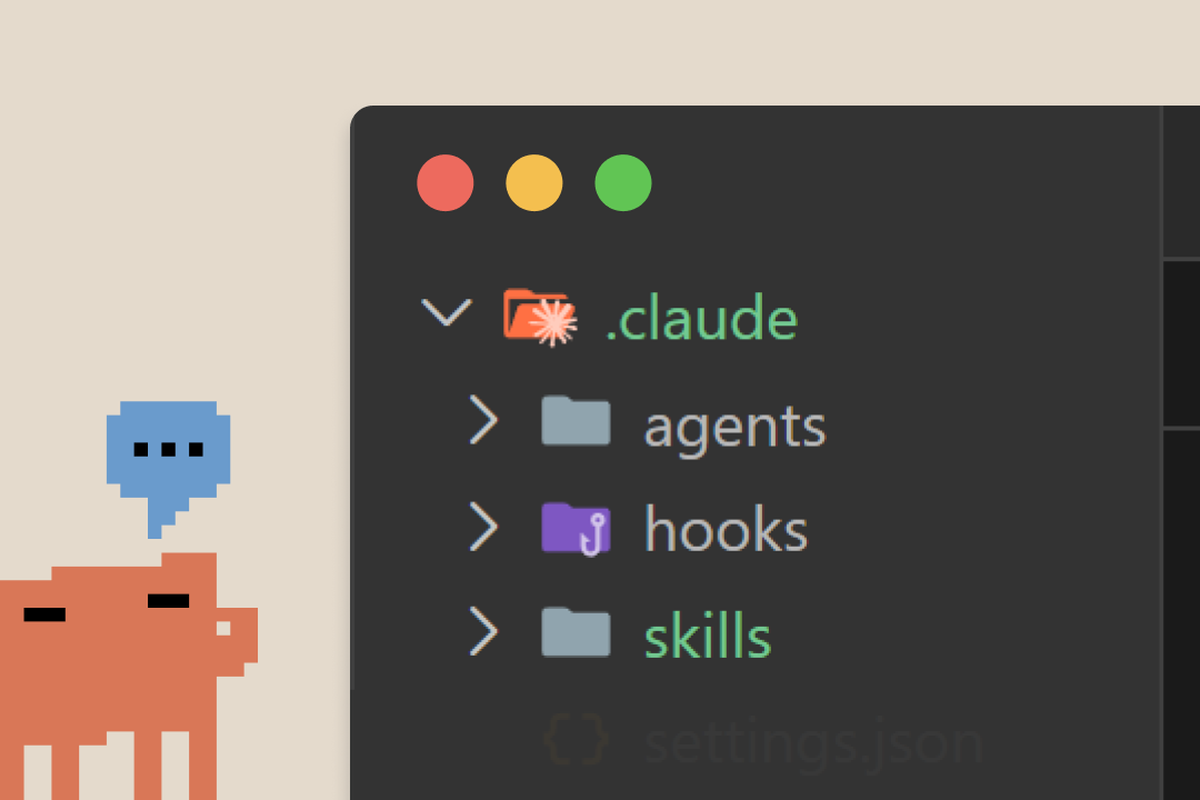
The tutorial's framing, which explicitly addresses how Skills "differ from and complement" other Claude Code features, reflects a notable architectural complexity in Anthropic's developer product. Claude Code now encompasses multiple overlapping primitives: agents capable of autonomous multi-step reasoning, hooks for event-driven behavior, slash commands for user-invoked actions, and Skills as a distinct layer. This layered architecture mirrors patterns seen in competing developer platforms — such as OpenAI's GPT Actions and function-calling ecosystem — where the challenge of helping users navigate feature boundaries becomes as important as the features themselves. The fact that Anthropic has invested in explicit comparative documentation suggests real-world confusion or friction among developers attempting to choose the right abstraction.
The companion tutorials listed alongside this page — "Using Claude Code Remote Control" and "Configuration and multi-file skills" — further reveal that Skills support multi-file configuration and remote execution paradigms, hinting at more sophisticated, stateful use cases than simple prompt templates. This positions Skills as a mechanism for encoding reusable, potentially organization-scoped behaviors into Claude Code workflows, as opposed to one-off agent runs. The emphasis on configuration and multi-file structure suggests Skills may function similarly to reusable software modules or plugins, enabling teams to share and version-control Claude behaviors across projects.
In the broader context of AI product development, this documentation effort reflects a general industry trend toward productizing AI capabilities into discrete, composable primitives rather than presenting AI as a monolithic chat interface. Anthropic, OpenAI, Google, and Microsoft have all moved toward feature ecosystems where developers must understand how different building blocks interact — memory, tools, agents, and workflows each carrying distinct tradeoffs. Anthropic's choice to foreground Skills as a named, documented concept within Claude Code rather than subsuming it under a general "tools" category suggests a deliberate product philosophy: that structured, reusable behavioral units deserve their own identity and governance separate from ad-hoc agentic behavior.
The overall architecture visible through this page underscores Anthropic's positioning of Claude not merely as a conversational AI but as a developer platform with a coherent, modular feature set. By publishing comparative documentation that helps developers reason about when to use Skills versus agents versus hooks, Anthropic is effectively investing in the long-term developer experience of Claude Code — reducing cognitive overhead for power users while signaling that the platform's complexity is intentional, organized, and growing. This kind of taxonomic clarity in documentation is increasingly a competitive differentiator as AI tooling matures and developer adoption moves from early experimenters to professional engineering teams with real architectural requirements.
 Read original article →