Detailed Analysis
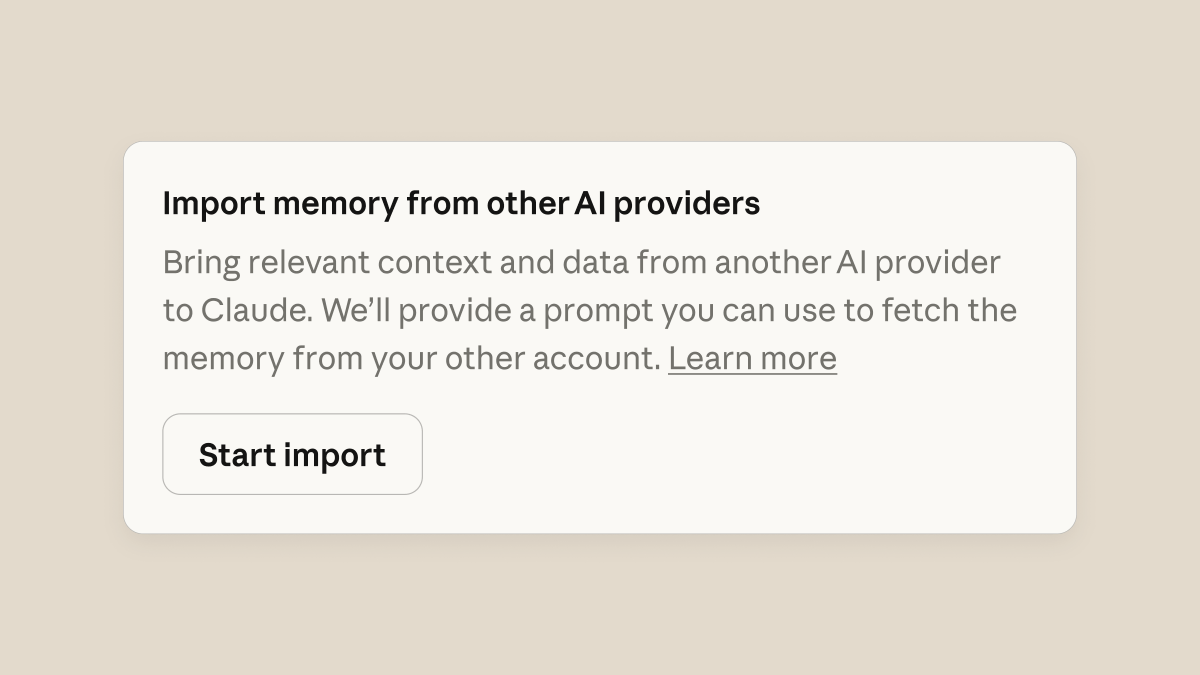
Anthropic has expanded access to Claude's Memory feature by making it available to users on the free plan, a notable democratization of one of the AI assistant's more sophisticated personalization capabilities. Previously restricted to paid tiers, Memory allows Claude to retain information about users across conversations — such as preferences, personal context, and recurring topics — enabling more coherent and personalized interactions over time without requiring users to re-establish context at the start of each session. The announcement also highlights two complementary improvements: a streamlined process for importing saved memories into Claude, and the ability for users to export their memories at will.
The decision to offer Memory on the free tier signals a strategic shift in how Anthropic is positioning Claude competitively. Memory and persistent context have become increasingly important differentiators in the AI assistant market, with competing platforms such as OpenAI's ChatGPT having offered memory features to free users for some time. By extending this capability beyond paid subscribers, Anthropic reduces a meaningful friction point for casual and cost-conscious users who previously experienced Claude as stateless — a limitation that could make it feel less like a personal assistant and more like a generic tool. The move is likely intended to deepen user engagement and retention among the broader free user base.
The addition of import and export functionality carries particular significance from a user agency and data portability standpoint. Allowing users to export their saved memories aligns with growing expectations around data ownership and transparency in AI systems — users can now inspect, back up, or migrate the contextual knowledge Claude has accumulated about them. The import feature similarly lowers barriers for users transitioning between devices, accounts, or platforms, ensuring continuity of the personalized experience they have built over time. Together, these features reflect an emerging industry norm in which AI companies are under increasing pressure to treat user data not as a locked-in asset, but as something the user controls.
Zooming out, the Memory expansion fits within a broader trend of AI assistant platforms racing to build longitudinal relationships with users rather than delivering isolated, one-off interactions. The ability to remember preferences, past conversations, and user-specific context transforms an AI from a reactive tool into something closer to a persistent collaborator. As competition in the consumer AI space intensifies through 2025 and into 2026, feature parity on free tiers is becoming a baseline expectation, and companies that gate foundational personalization features behind paywalls risk ceding ground to more open competitors. Anthropic's move with Memory on the free plan reflects both competitive necessity and a broader philosophical commitment to making capable AI assistance broadly accessible.
 Read original article →