Detailed Analysis
Anthropic's Claude use case showcase, published on the Claude product platform, presents a curated gallery of practical applications spanning research, education, nonprofit management, finance, and creative work, reflecting the company's strategic effort to position Claude not merely as a general-purpose chatbot but as a domain-specific collaborative thinking tool. The page organizes its examples around interactive, inline experiences — visualizations, diagrams, sliders, and charts generated directly within the conversation — emphasizing a paradigm of co-working rather than simple query-and-response. This design philosophy distinguishes Claude's public-facing identity from competitors by centering the narrative on active, iterative problem-solving rather than passive information retrieval.
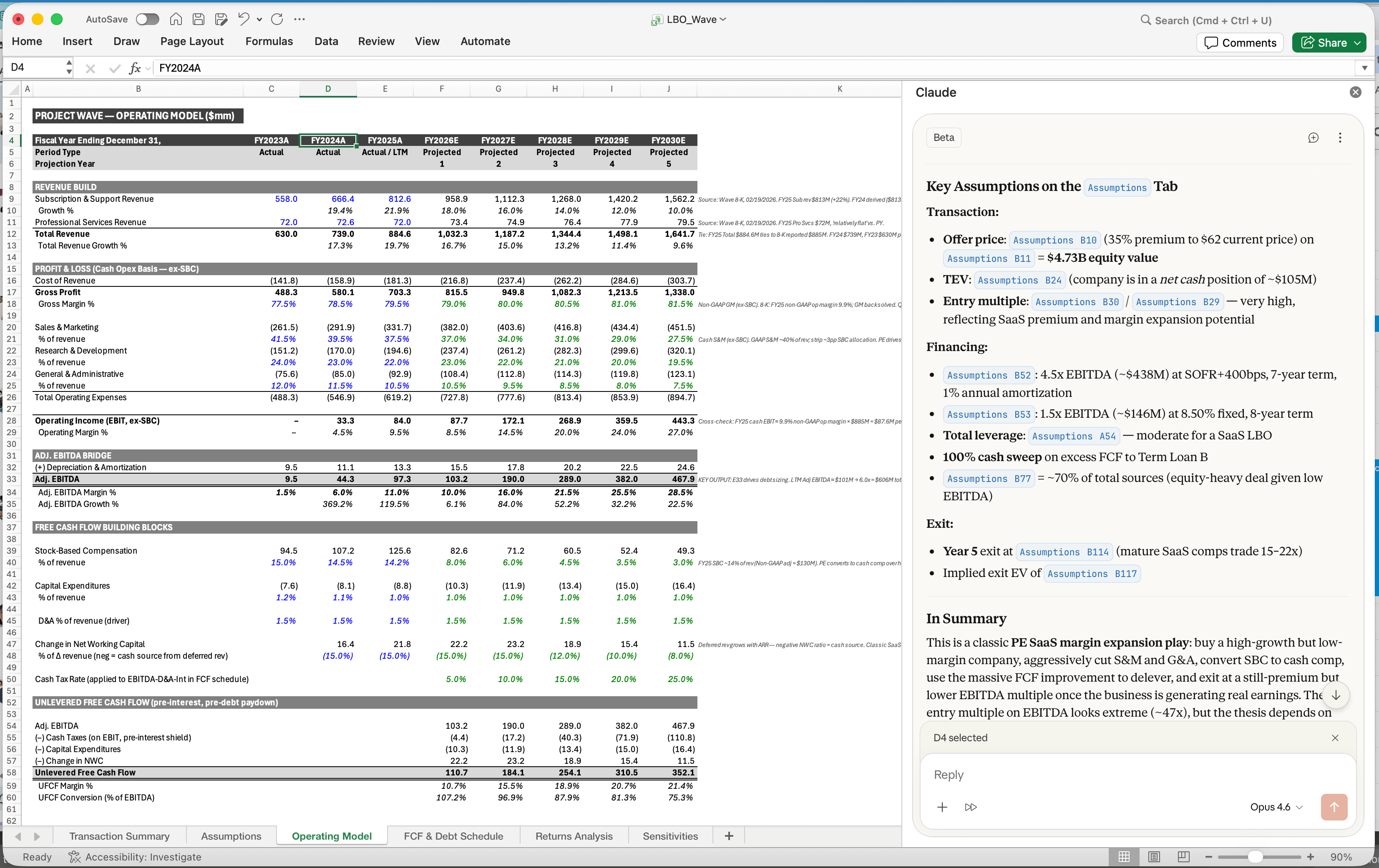
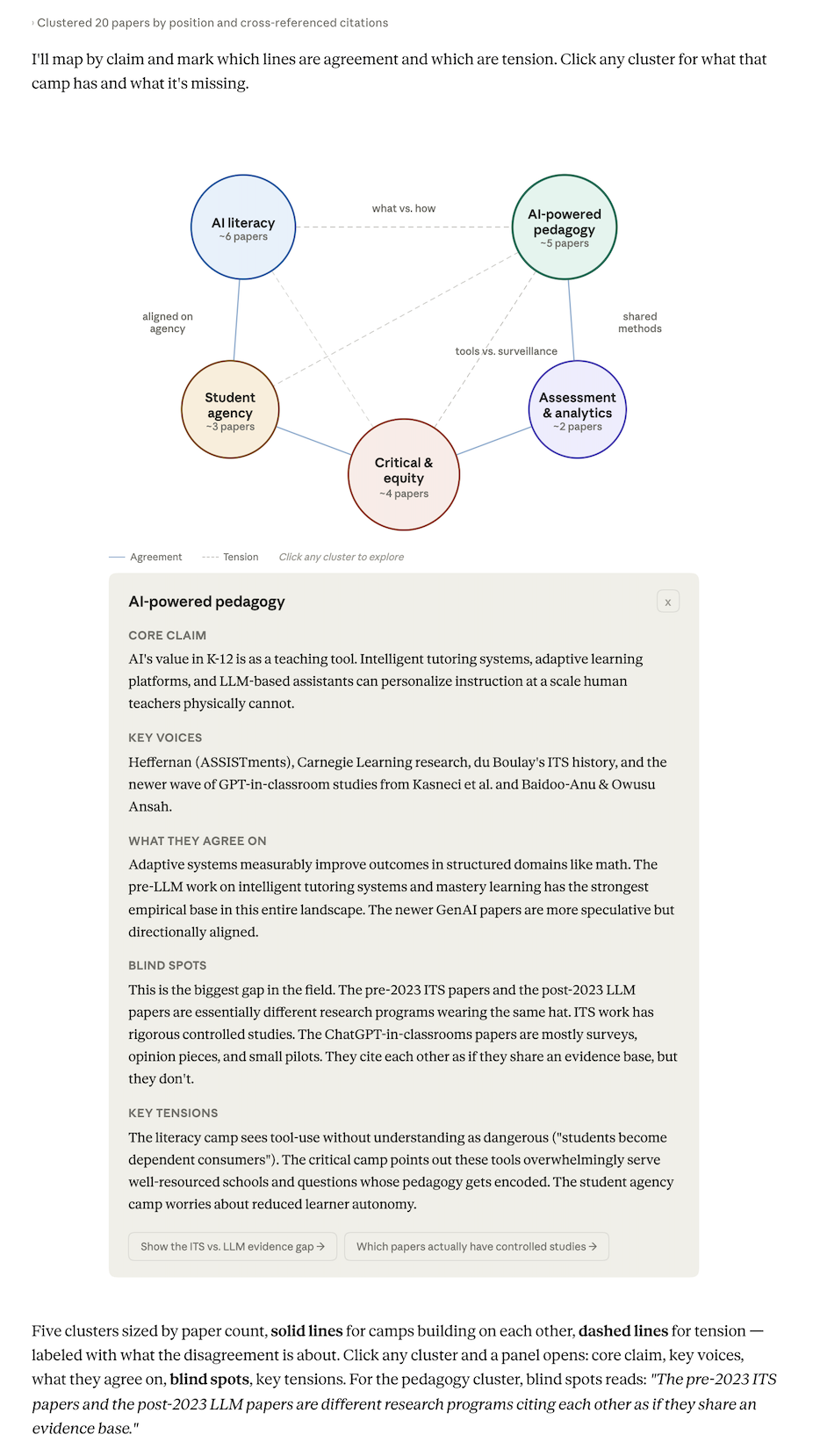
Several of the featured use cases target professional and institutional users with high-stakes decision-making needs. Nonprofit administrators are shown tools for gift pyramid modeling and donor retention analysis, with dynamic sliders that redraw projections in real time, while grant seekers are offered a multi-variable funder comparison interface. Financial analysts are presented with a workflow that integrates S&P earnings data, Excel model editing via a Claude plugin, and PowerPoint deck generation — a cross-platform productivity loop that signals Anthropic's ambition to embed Claude into existing enterprise software ecosystems rather than replace them. Academic users, meanwhile, are offered literature review mapping that clusters arguments, identifies tensions between scholarly camps, and surfaces blind spots, addressing a genuine pain point in research synthesis that traditional search tools cannot resolve.
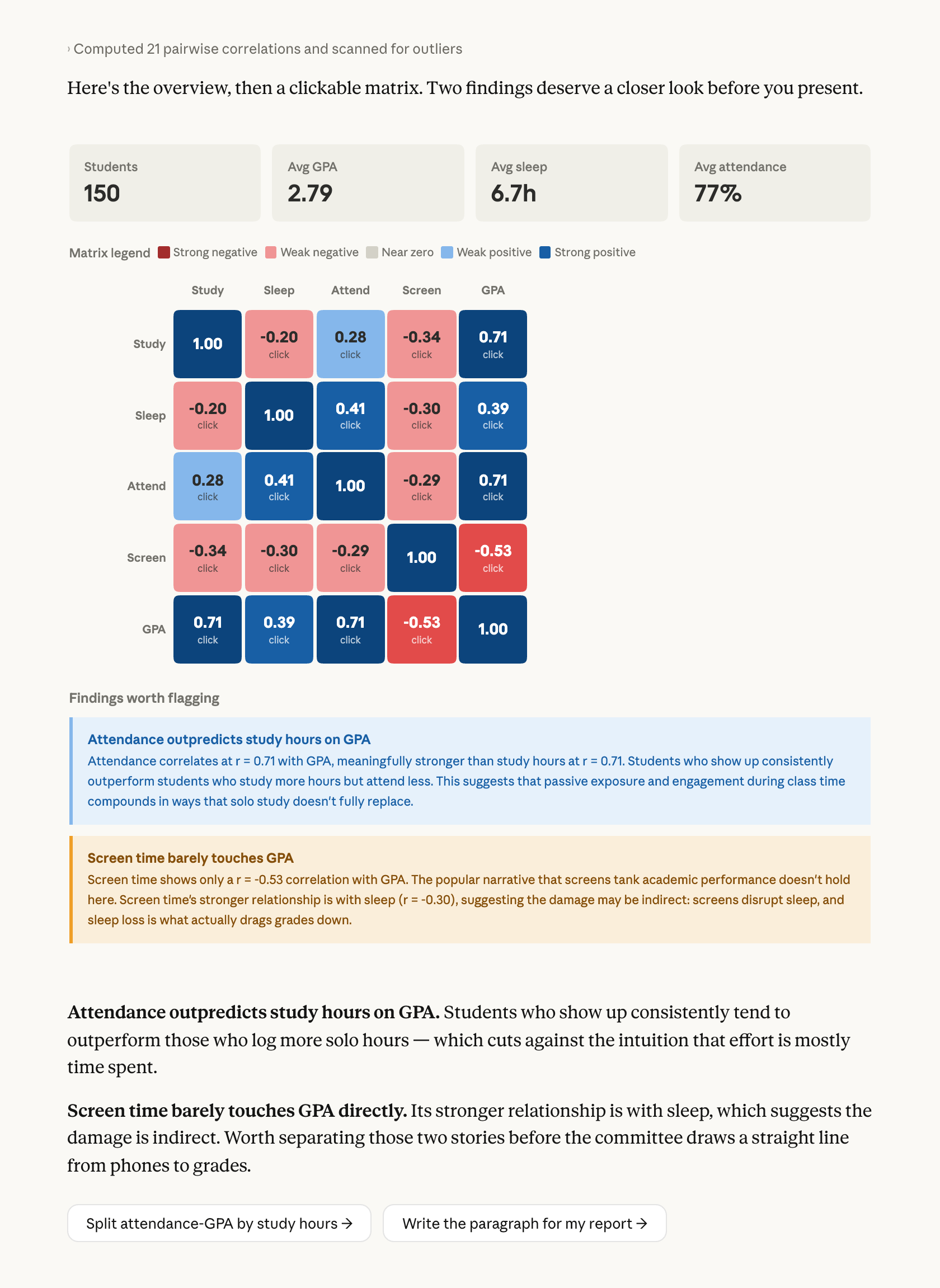
The educational applications featured on the page are notable for their emphasis on pedagogical scaffolding rather than answer delivery. Claude is shown helping teachers rearrange syllabi based on prerequisite logic, building interactive scatter plots that allow students to manipulate data points and observe statistical effects, and sketching visual explanations of complex concepts mid-lesson-prep. This framing is a deliberate counter-narrative to the widespread concern that AI tools undermine learning by providing ready-made answers; instead, Anthropic positions Claude as a tool that deepens understanding through guided exploration. The inclusion of a "theory of change" visualization tool for program designers further illustrates the platform's reach into specialized professional workflows that have historically resisted automation.
Taken together, the use case gallery reflects several broader trends in the AI industry as of early 2026. First, there is an accelerating push toward multimodal, interactive AI outputs — moving beyond text generation into inline data visualization, dynamic graphics, and manipulable interfaces that blur the boundary between conversation and application. Second, leading AI labs are increasingly competing on vertical depth, targeting specific professional communities with purpose-built workflows rather than relying solely on general capability benchmarks. Third, the emphasis on human agency — dragging sliders, clicking into data, testing scenarios — signals a maturing awareness among AI developers that user trust and adoption depend on keeping humans demonstrably in control of consequential outputs. Anthropic's use case strategy thus reflects both its product roadmap and its broader safety-oriented philosophy, presenting Claude as a collaborator that amplifies human judgment rather than supplants it.




.png)
.png) Read original article →
Read original article →