Detailed Analysis
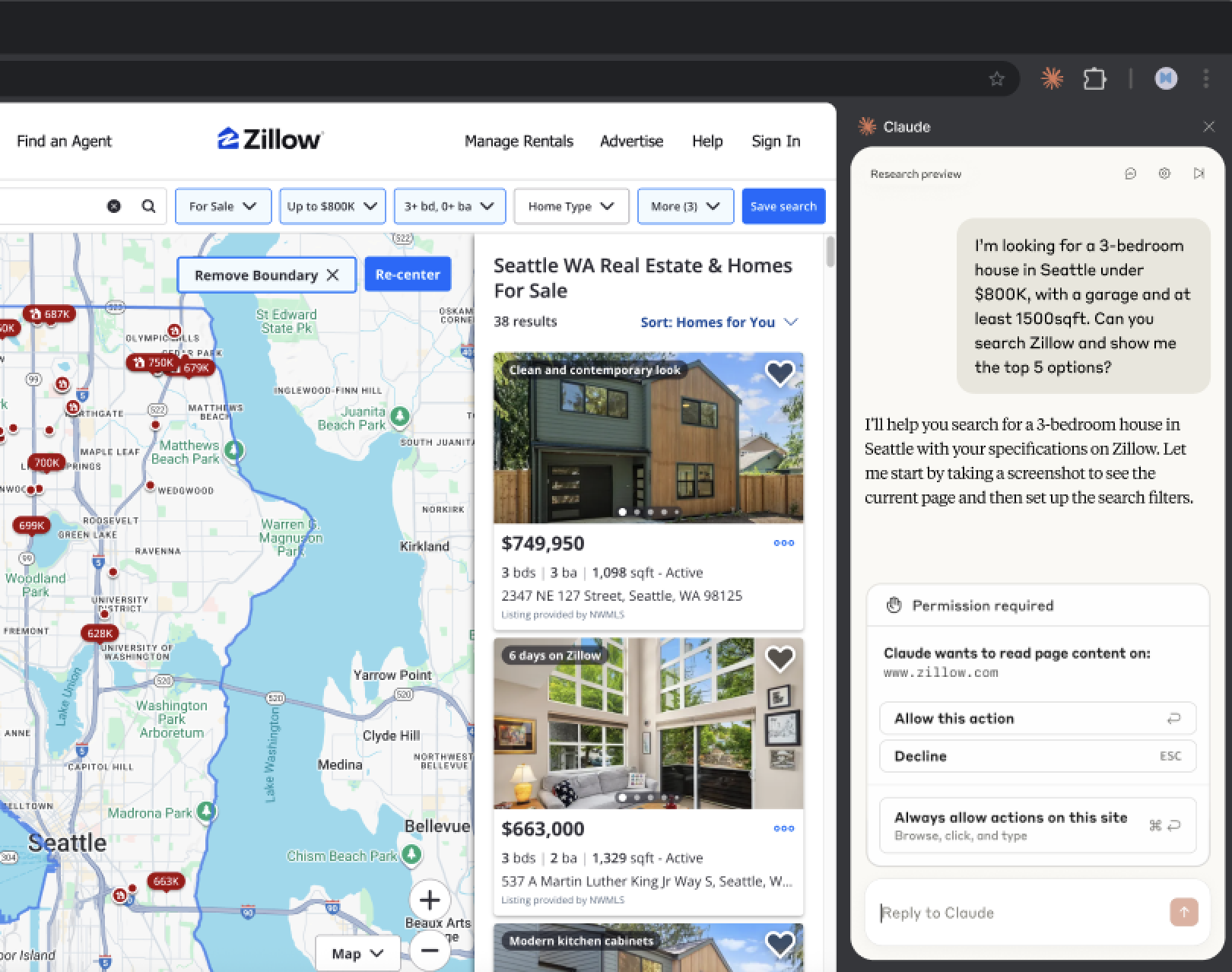
Anthropic's Claude in Chrome represents a significant expansion of the AI assistant's capabilities beyond conversational interaction into direct browser-based task execution. The feature, available exclusively to paid plan subscribers, integrates Claude as an active participant within the Chrome web browser, granting it the ability to see browser content visually, interpret interface elements, click buttons, fill forms, and coordinate work across multiple tabs within a tab group. By operating with the user's existing permissions and login sessions, Claude can access services and platforms that would otherwise be inaccessible to external AI tools, making it capable of acting on authenticated, personalized digital environments rather than merely surfacing publicly available information.
The architecture of the feature reflects a deliberate design philosophy centered on augmentation rather than full autonomy. Anthropic draws a clear distinction between tasks suited to the browser extension — such as executing defined workflows on specific websites, interacting with login-gated content, and automating repetitive multi-step processes — versus tasks better handled through Claude's standard conversational interface, such as broad exploratory research or deep multi-source synthesis. This taxonomy signals a recognition that browser-level automation carries meaningful risk, as evidenced by the explicit safety disclaimer embedded in the feature documentation. The system's ability to continue working across tab switches and to notify users when human input is required further positions the tool as a persistent background collaborator rather than a simple command executor.
The shortcut and scheduling infrastructure embedded in Claude in Chrome points toward Anthropic's broader ambition to enable durable, repeatable AI-assisted workflows. Users can record demonstrations of their own processes, convert completed chat workflows into reusable prompts, or schedule recurring tasks such as inbox triage, metrics extraction, or pre-meeting research briefs. This workflow-capture mechanic effectively allows Claude to learn task-specific behavior from user demonstration without requiring the user to articulate technical instructions, lowering the barrier to automation for non-technical users while allowing power users to build increasingly sophisticated personal automation pipelines.
The release fits within a broader industry trend of AI assistants evolving from text-generation tools into agentic systems capable of taking real-world digital actions. Competitors including Google's Gemini, OpenAI's Operator, and various third-party browser automation tools have similarly moved in the direction of web-native AI action. What distinguishes Anthropic's approach is its emphasis on user-controlled permission boundaries, explicit pauses before consequential actions like form submissions, and the deliberate acknowledgment of tasks better handled by humans — a safety-conscious framing consistent with Anthropic's publicly stated commitments to responsible AI deployment. As agentic AI capabilities mature, the norms established around user oversight, task delegation, and consent at this early stage are likely to shape how trust in browser-level AI is built or eroded across the industry.
 Read original article →