Detailed Analysis
Claude Design, a tool developed by Anthropic Labs, represents a significant step in operationalizing AI-assisted product development by enabling designers and product managers to move from concept to interactive prototype within a single conversation. The tool supports a range of common product workflows — including rapid feature prototyping, stakeholder alignment through comparative design variants, complete user flow mapping, and the construction of internal tools such as admin panels and moderation queues. Rather than replacing existing design infrastructure, Claude Design positions itself as an accelerant: a means of making ideas tangible quickly enough to solicit meaningful feedback before engineering resources are committed. The ability to generate two or three alternative interface approaches simultaneously — such as a card-based versus sidebar versus tab-navigation user profile — directly addresses one of the most time-consuming phases of product design: aligning stakeholders around a direction.
The most strategically significant feature of Claude Design is its capacity to integrate with a team's existing codebase, fundamentally changing the fidelity of what a "prototype" means in practice. When linked to a live repository — either via GitHub import or local directory attachment — Claude Design no longer generates generic UI; instead, it draws on the team's actual component library, styling conventions (whether CSS modules, Tailwind, or styled-components), spacing scales, and file organization patterns. This architectural awareness collapses the traditional gap between design artifact and shippable code. In conventional design workflows, prototypes built in tools like Figma routinely require significant reinterpretation during engineering handoff because the components depicted do not map cleanly onto what actually exists in the codebase. Claude Design's contextual awareness of real components means that a prototype referencing a `ProductCard` component or replicating a settings page layout pattern is already substantively aligned with production constraints before a single developer writes a line of implementation code.
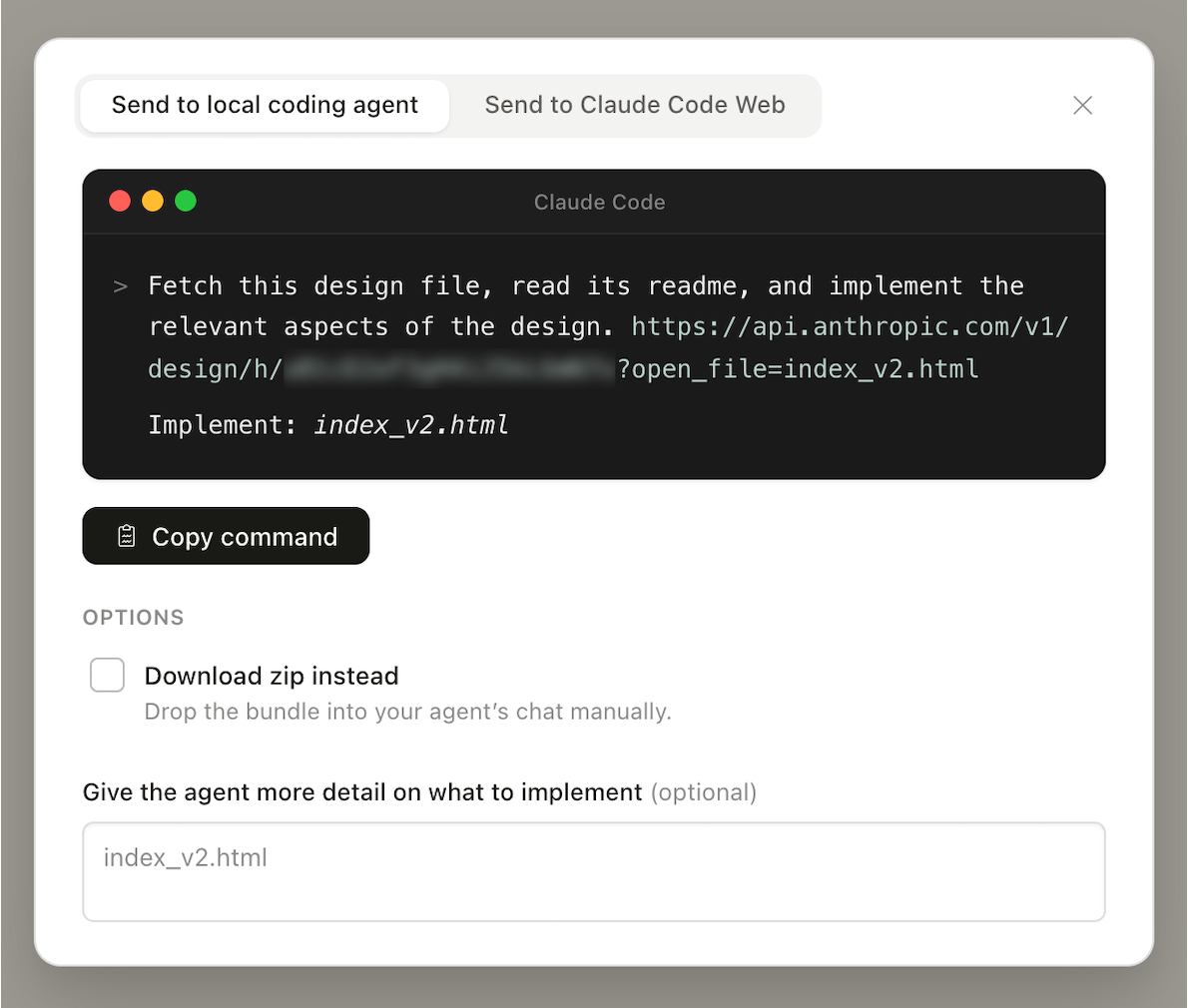
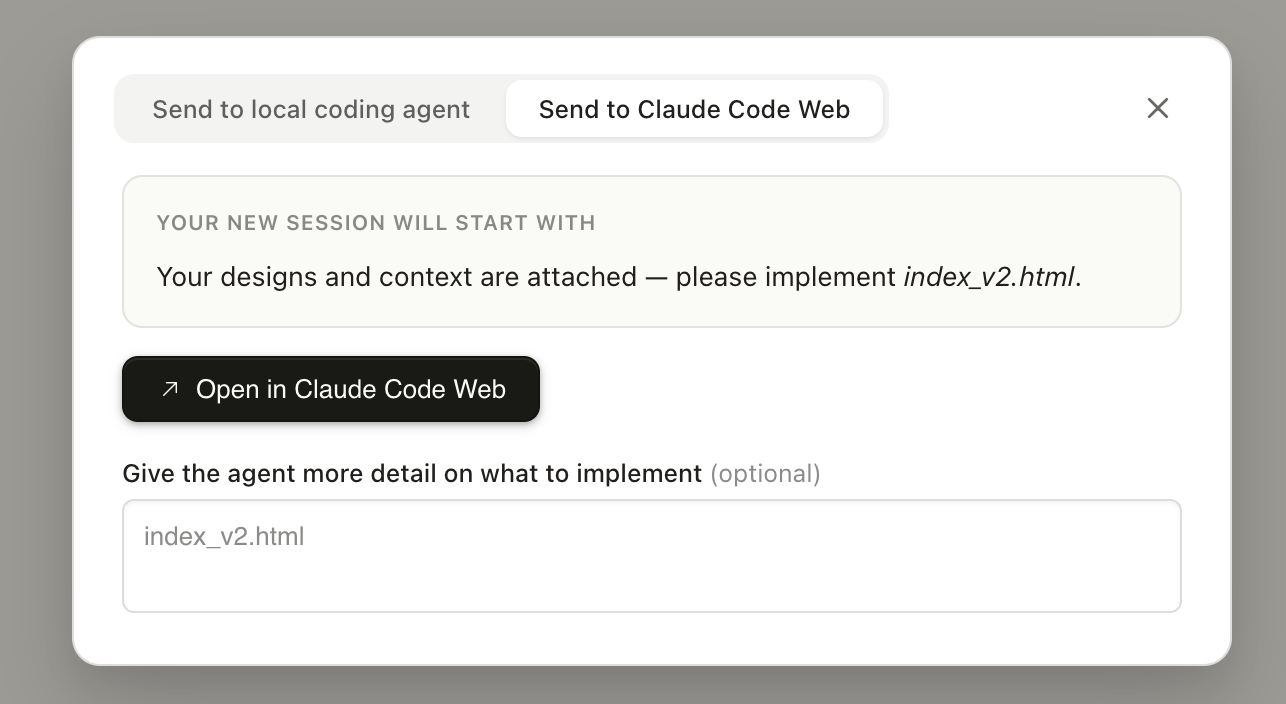
The handoff mechanism to Claude Code further extends this value proposition by preserving design intent, component selections, and architectural decisions as structured artifacts — bundling design files, conversation history, and a README into an exportable package that a developer or agentic coding system can act upon directly. This chain — from prompt to prototype to code handoff — reflects a broader architectural vision in which AI agents handle distinct phases of the product development lifecycle while maintaining continuity of context across those phases. The optional Claude Code Web handoff suggests Anthropic is also targeting teams without local development environments, broadening accessibility to non-engineering stakeholders who might otherwise hand off through screenshots or static specifications.
This development sits within a rapidly maturing ecosystem of AI-assisted design tooling. Competing and complementary workflows already exist — including Figma's own AI features, Model Context Protocol integrations that allow Claude to read and write Figma layers bidirectionally, and agentic CLI tools like Codex CLI for rough-to-polished prototype generation. Practitioners documented in sources ranging from the UX Collective to Jane Street's engineering blog have noted that live-codebase prototypes yield higher-quality feedback loops than static Figma mockups, since users and stakeholders interact with functional interfaces rather than visual approximations. One designer reported prototyping new application features entirely within Claude Code, iterating visually without Figma at all — a workflow pattern that Claude Design appears explicitly designed to systematize and extend to a broader, less technically fluent audience.
The tool also surfaces meaningful operational constraints that reflect honest engineering tradeoffs. Large monorepos and repositories with more than roughly one hundred active contributors can introduce browser instability and lag, particularly in Chrome, when entire file trees — including `.git` and `node_modules` directories — are attached. Anthropic's recommendation to link specific packages or subdirectories rather than entire repositories signals that codebase integration, while powerful, requires deliberate scoping to remain performant. These limitations point to an important caveat for enterprise product teams: the value of codebase-aware prototyping scales with the cleanliness and modularity of the underlying architecture. Teams with well-organized component libraries will extract substantially more utility from Claude Design than those working in tightly coupled or poorly documented codebases, reinforcing the long-standing principle that AI tooling amplifies existing organizational practices rather than compensating for their absence.

 Read original article →