Detailed Analysis
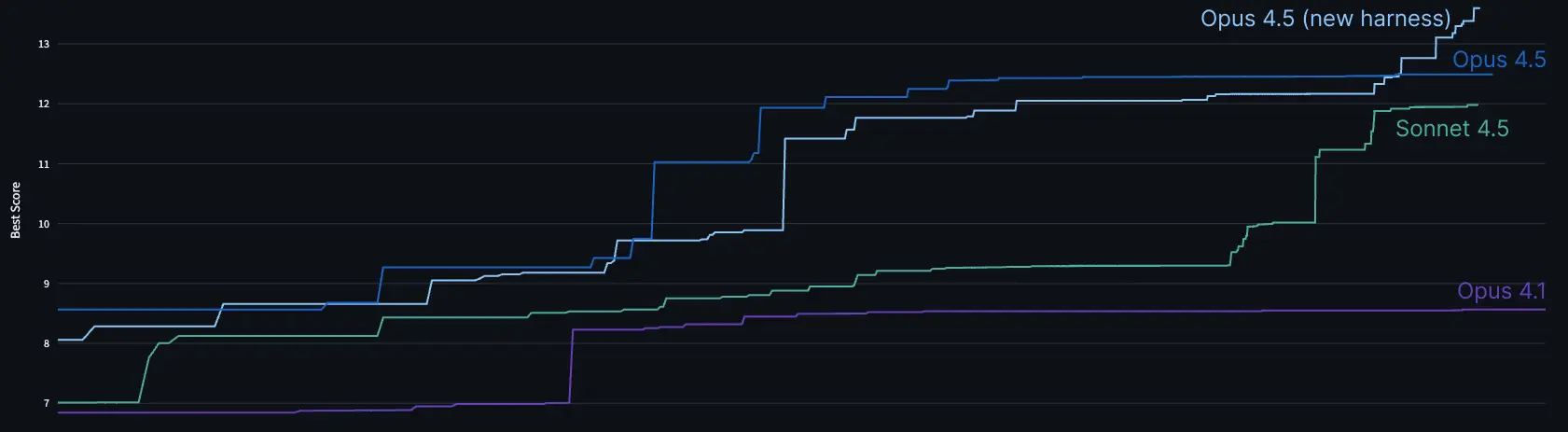
Anthropic's performance engineering team has publicly documented a significant and self-referential challenge in technical hiring: the company's own AI models have repeatedly invalidated the very take-home assessments used to recruit the engineers who build those models. Written by Tristan Hume, a lead on Anthropic's performance optimization team, the piece describes how a custom take-home test designed in late 2023 to evaluate candidates for accelerator optimization roles has required multiple redesigns as successive Claude models demonstrated the ability to match or exceed human candidate performance under identical testing conditions. Most strikingly, Claude Opus 4 outperformed most human applicants when given the same time constraints, and Claude Opus 4.5 subsequently matched even the strongest candidates — effectively eliminating the test's ability to distinguish between top human talent and the company's most capable model. Over 1,000 candidates have completed some version of the test, and the engineers hired through it have been instrumental in standing up Anthropic's Trainium cluster and shipping every model since Claude 3 Opus.
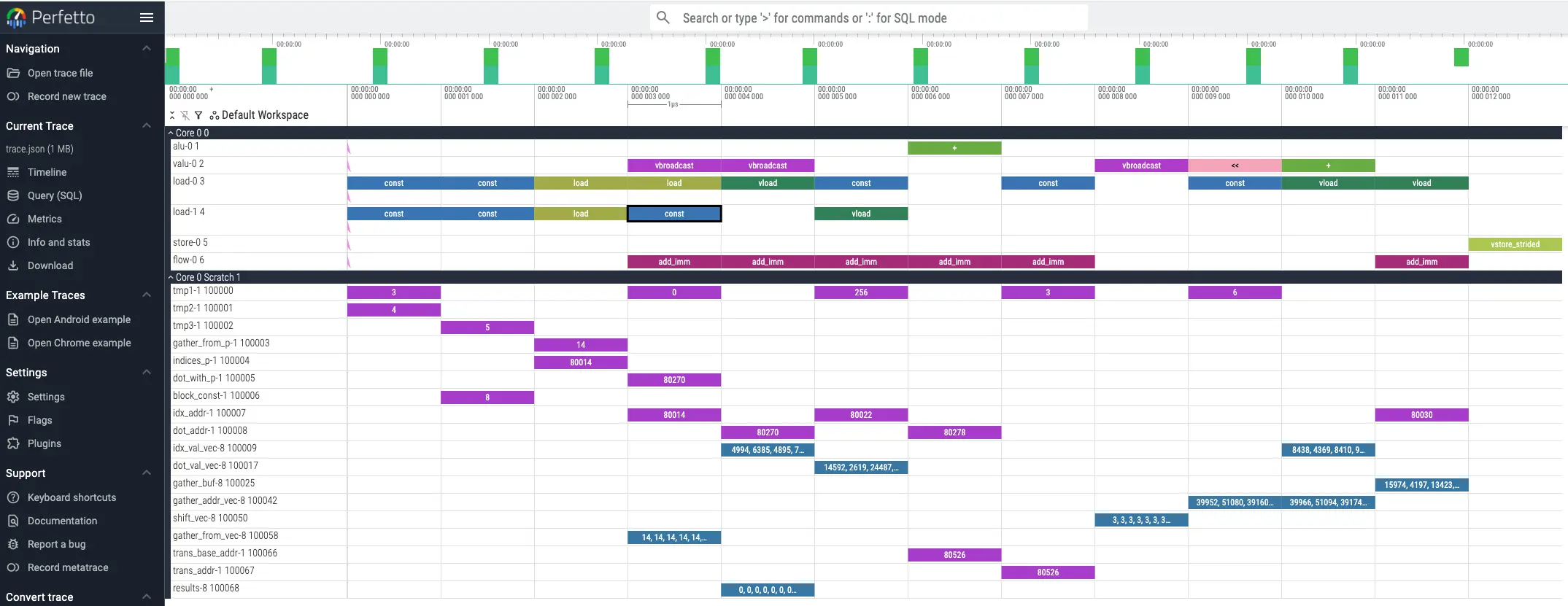
The take-home's original design reflected deliberate, principled departures from conventional technical interviewing. Hume built a Python simulator for a fictional accelerator with characteristics analogous to TPUs, featuring manually managed scratchpad memory, VLIW instruction packing, SIMD vector operations, and multicore distribution — mirroring the actual complexity of production accelerator work. Critically, the test was designed with AI assistance explicitly permitted from the outset, on the theory that longer-horizon, multi-faceted optimization problems would still require genuine human judgment even when AI tools were available. The format also prioritized a realistic working environment, adequate time for comprehension and tooling, and problems with sufficient depth that even strong candidates could not exhaust all scoring opportunities. These design choices reflected a sophisticated understanding that signal in technical evaluation comes not from any single insight but from the aggregate demonstration of judgment across many sub-problems.
The arms race dynamic Hume describes captures a broader structural tension now facing organizations that rely on technical assessments for talent selection. As frontier AI models become capable enough to produce high-quality outputs within time-bounded, well-specified engineering tasks, the traditional mechanisms for distinguishing human skill levels are progressively eroded. The fact that this dynamic is unfolding inside Anthropic itself — where the evaluators, the candidates, and the AI systems disrupting the evaluation are all part of the same organizational mission — makes it an unusually concentrated case study. The article notes that humans can still outperform current models given unlimited time, which is why Anthropic is releasing the original test as an open challenge; this suggests the boundary between human and AI performance is currently located at the intersection of time constraints and problem complexity, not at raw capability ceilings.
This situation reflects a wider pattern in AI development where capability advances outpace the institutional and procedural frameworks built around earlier capability baselines. Hiring pipelines, academic benchmarks, and professional certification systems were all designed under assumptions about the upper bound of automated performance that frontier models are rapidly invalidating. Anthropic's willingness to publicly document three successive failures of its own evaluation instrument — and to attribute those failures directly to its own models by name — is notable for its transparency, particularly given the competitive sensitivities around both hiring and model benchmarking in the AI industry. It frames the problem not as a one-time failure but as an ongoing iterative design challenge that will likely require continuous reinvention as model capabilities continue to advance.
The broader implication is that evaluating human expertise in any domain where AI systems are rapidly improving requires a fundamental rethinking of what distinguishes human from machine performance, and under what conditions that distinction remains meaningful. Hume's framework — prioritizing problems with long time horizons, multiple compounding sub-tasks, and open-ended creative depth — points toward one category of solution, but the article's own narrative demonstrates that even carefully designed evaluations can have relatively short shelf lives. For the AI industry specifically, this creates a recursive problem: the engineers most needed to advance AI capabilities are the ones hardest to identify precisely because those AI capabilities are advancing so quickly.

 Read original article →