Detailed Analysis
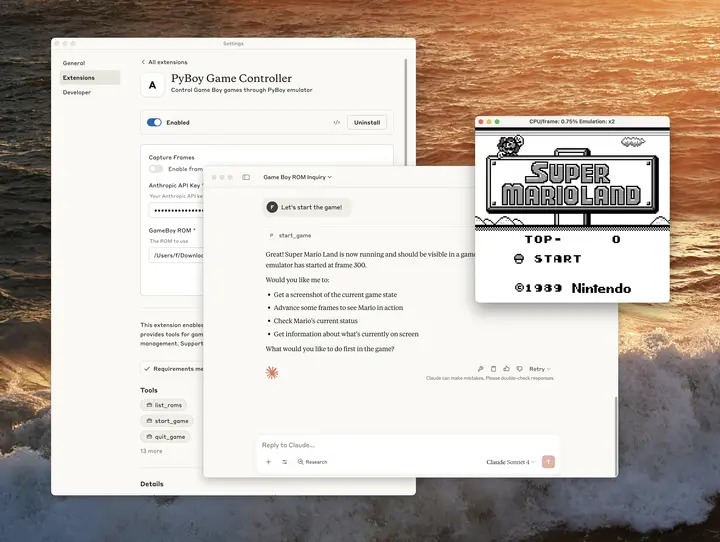
Anthropic introduced Desktop Extensions for Claude Desktop in September 2025, a new packaging format designed to dramatically simplify the installation of Model Context Protocol (MCP) servers. Distributed as `.mcpb` (MCP Bundle) files — updated from the original `.dxt` extension — these packages bundle an entire MCP server, including all runtime dependencies, into a single ZIP-based archive. Where users previously needed to install external runtimes like Node.js or Python, manually edit JSON configuration files, and resolve dependency conflicts via the command line, they can now install an MCP server by downloading a `.mcpb` file, double-clicking it, and clicking "Install." Claude Desktop ships with a built-in Node.js runtime, handles automatic updates, and stores sensitive credentials such as API keys securely in the operating system's native keychain, removing virtually all technical prerequisites from the end user.
The architecture of a Desktop Extension centers on a `manifest.json` file that serves as the authoritative descriptor for the package. It defines human-readable metadata (name, version, author, description), server configuration (supporting Node.js, Python, or compiled binary types), user-configurable fields, and platform-specific overrides. A key design feature is the manifest's support for template literals — values like `${user_config.api_key}` and `${__dirname}` are resolved at runtime, allowing developers to declaratively specify what configuration users must supply before an extension activates. Claude Desktop enforces these requirements, refusing to enable an extension until all declared user inputs are provided, and transparently injecting resolved values when launching the server. This creates a structured, safe handoff between developer intent and user configuration without requiring any direct interaction with configuration files.
The significance of this release lies in the gap it closes between technical capability and practical accessibility. MCP, launched by Anthropic in late 2024, enabled Claude to interface with local file systems, databases, development tools, and private data sources in ways that remote API-based models cannot. However, adoption among non-developer users was severely constrained by the complexity of the setup process. Desktop Extensions reframe MCP server distribution as an installable software product rather than a developer integration task, effectively expanding the potential user base for local MCP tooling from technically sophisticated users to the general Claude Desktop audience. The `.mcpb` format also implicitly creates the foundation for a distribution ecosystem — analogous to browser extensions or mobile app stores — where MCP servers can be discovered, shared, and installed with low friction.
This development reflects a broader pattern in AI tooling where the initial rollout of powerful but complex capabilities is followed by usability-focused packaging work to broaden adoption. MCP itself was a protocol-layer innovation; Desktop Extensions represent the distribution-layer innovation that makes the protocol practically usable at scale. The decision to bundle runtimes, manage secrets at the OS level, and automate updates mirrors conventions established by mature software ecosystems such as browser extensions and IDE plugins, suggesting Anthropic is deliberately borrowing from proven models of developer ecosystem growth. By reducing the barrier to entry for local MCP server installation, Anthropic positions Claude Desktop as a more competitive platform for users who require privacy-preserving, on-device AI integrations — a differentiator relative to cloud-only AI assistant experiences where data must leave the user's machine.

 Read original article →