Detailed Analysis
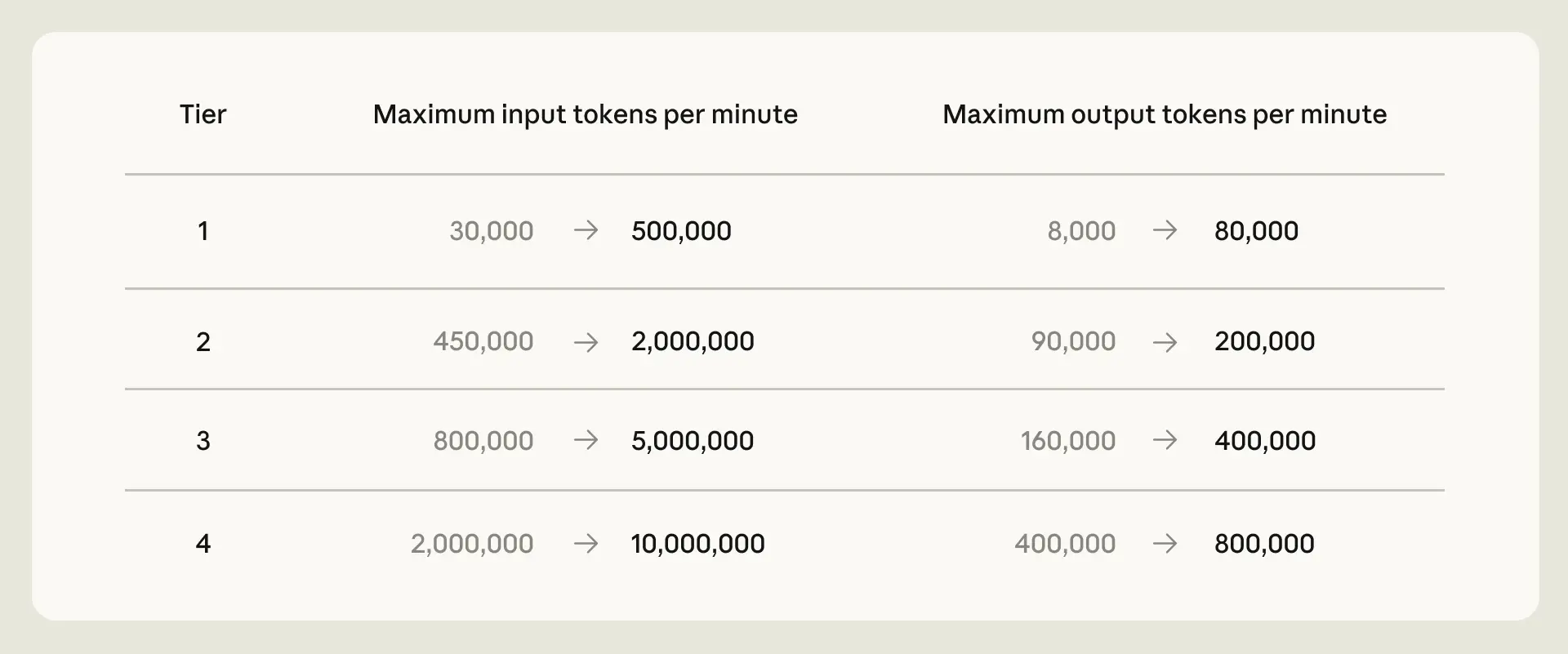
Anthropic has announced a major compute expansion through a new partnership with SpaceX, granting the AI company access to the entirety of Colossus 1's data center capacity — more than 300 megawatts of power and over 220,000 NVIDIA GPUs. The deal is expected to come online within a month and will directly benefit Claude Pro and Claude Max subscribers. Alongside this agreement, Anthropic disclosed an interest in collaborating with SpaceX on orbital AI compute infrastructure at gigawatt scale, signaling ambitions that extend well beyond conventional ground-based data center buildouts. These announcements are paired with immediate, tangible benefits to end users: doubled five-hour rate limits for Claude Code across Pro, Max, Team, and seat-based Enterprise plans; elimination of peak-hour limit reductions for Pro and Max accounts; and significantly raised API rate limits for Claude Opus models.
The SpaceX deal is the latest in a series of massive infrastructure commitments that collectively represent one of the largest compute acquisition efforts in the AI industry. Anthropic's existing agreements include an up-to-5-gigawatt arrangement with Amazon featuring nearly 1 GW of capacity by end of 2026, a 5 GW deal with Google and Broadcom set to begin coming online in 2027, a $30 billion Azure capacity partnership with Microsoft and NVIDIA, and a $50 billion investment in American AI infrastructure with Fluidstack. The scale and diversity of these arrangements reflect a deliberate strategy to ensure hardware resilience and avoid dependence on any single cloud or chip provider, with Claude running across AWS Trainium, Google TPUs, and NVIDIA GPUs simultaneously.
The announcement also addresses the growing compliance needs of enterprise customers, particularly in regulated sectors such as financial services, healthcare, and government. Anthropic is explicitly planning international capacity expansion, with the Amazon collaboration already incorporating additional inference infrastructure in Asia and Europe. The company has stated a deliberate preference for building in democratic countries with stable legal and regulatory frameworks, framing geopolitical considerations as central to its infrastructure strategy — a notable positioning that distinguishes Anthropic's expansion philosophy from purely cost- or latency-driven approaches.
The rate limit improvements and infrastructure buildout reflect an escalating competition among frontier AI labs for developer and enterprise adoption. Claude Code in particular has emerged as a significant product surface for Anthropic, and the doubling of rate limits combined with the removal of peak-hour penalties suggests the company is responding directly to friction points that heavy users have encountered. The broader compute arms race now unfolding across the industry — with OpenAI, Google DeepMind, and Meta all accelerating infrastructure investment — makes Anthropic's aggressive multi-partner approach a strategic necessity as much as an operational one.
The orbital compute ambition embedded in the SpaceX partnership, while speculative at this stage, points to a longer-term vision in which AI inference workloads may eventually be distributed across space-based hardware. Such a system could theoretically offer globally distributed, low-latency inference with reduced dependency on terrestrial energy grids and regulatory jurisdictions. Whether that vision materializes in the near term remains uncertain, but its inclusion in an otherwise operational announcement underscores how aggressively Anthropic is thinking about the physical infrastructure layer that will underpin next-generation AI capabilities.

 Read original article →