Detailed Analysis
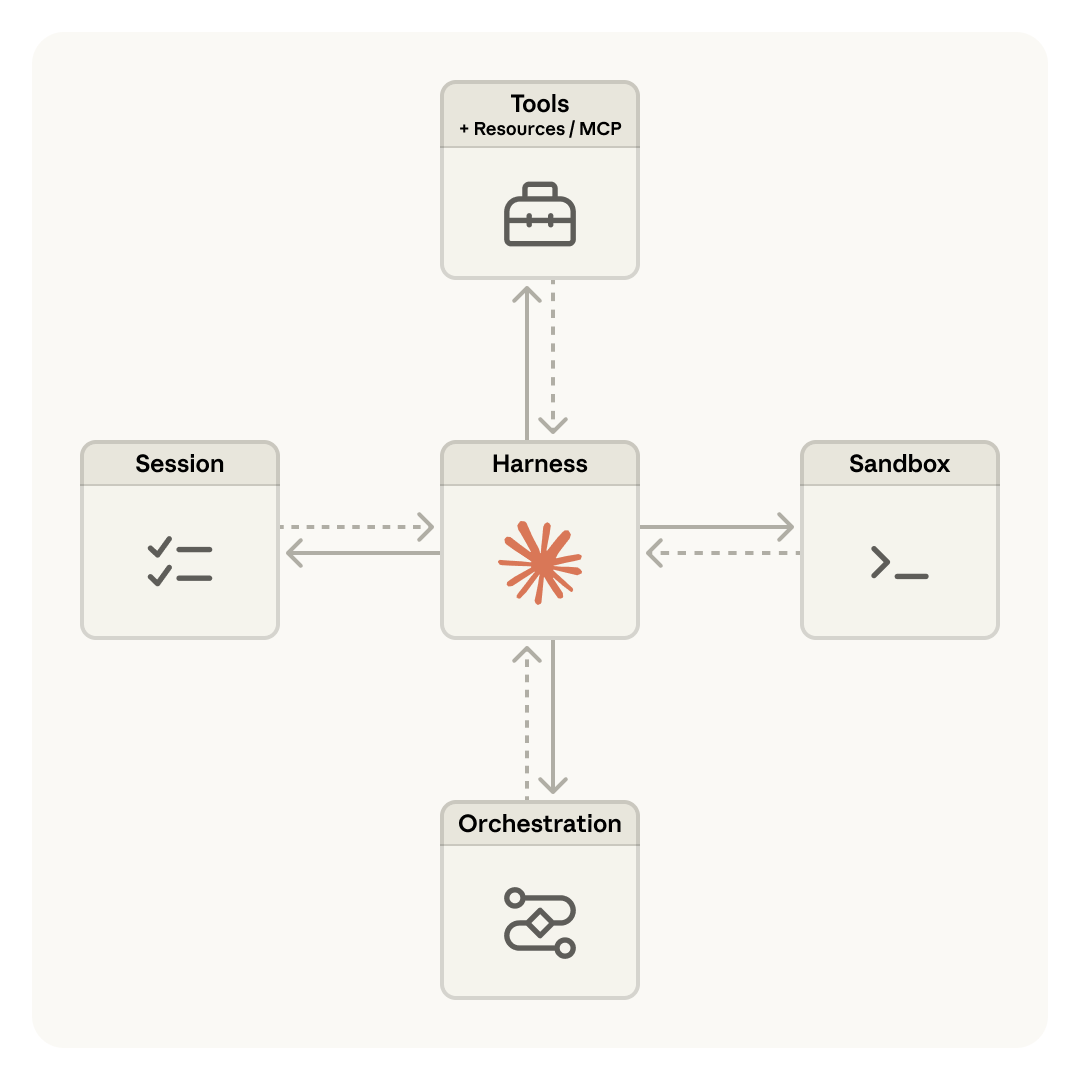
Anthropic launched Claude Managed Agents into public beta, a hosted platform designed to eliminate the infrastructure bottleneck that has long prevented development teams from shipping production-grade AI agents at speed. The core problem the product addresses is well-documented in the developer community: while the underlying language model calls are relatively straightforward, the surrounding production stack — error handling, retries, session memory, sandbox execution, orchestration loops, and state management between runs — has historically consumed the majority of engineering effort. Managed Agents abstracts this layer by providing pre-built components including agent harnesses (routing loops that connect Claude's tool calls to infrastructure), sessions (append-only interaction logs for state persistence), and sandboxes (isolated execution environments for code and file operations). The result, according to Anthropic's own framing, is a reduction in time-to-production from months to days.
The developer response to the launch, visible across the social thread, reflects genuine recognition of a structural pain point. Practitioners running AI development agencies shipping agents for multiple clients specifically called out error handling, retries, and production stability — not the model itself — as the primary friction. This reaction validates the product thesis: the model layer has been commoditizing, while the orchestration and reliability layer has remained fragmented and custom-built by every team independently. Anthropic's move to standardize this layer represents a strategic repositioning from model provider to platform provider, directly competing with orchestration frameworks like CrewAI, LangGraph, and others that have occupied that middle layer. Tellingly, at least one community member noted the launch effectively validated and simultaneously threatened their own startup concept in the same space.
The technical foundation for Managed Agents draws on Anthropic's own internal experience deploying production multi-agent systems. The company's Claude Research product used orchestrator-worker patterns running parallel research across web and enterprise sources, achieving documented performance gains of over 90% compared to single-agent approaches. Earlier internal tooling like Buddybot required custom orchestration built on frameworks such as Temporal and AWS Strands. By packaging the lessons from those deployments into a managed service, Anthropic is effectively productizing institutional knowledge that most external teams would need months to accumulate independently. Context engineering techniques — including just-in-time data loading and compression — are also built into the platform to ensure reliability across long-horizon, multi-step tasks.
The broader strategic implication of this launch concerns where competitive moats in the AI agent ecosystem will ultimately reside. Several developers in the thread articulated clearly that once the harness and infrastructure layers are abstracted away, differentiation among "agent startups" collapses rapidly, shifting the competitive advantage toward distribution, domain-specific workflows, and user trust. Anthropic is making a calculated bet that owning the infrastructure layer — not just the model — is necessary to capture long-term value as agentic workflows become the dominant mode of enterprise AI deployment. The observation that "the orchestration layer is the real moat" and that Anthropic has consumed competitors' lunch with built-in tool use and MCP (Model Context Protocol) support reflects market recognition that vertical integration from model to managed runtime is a defensible position in a way that model capability alone is not.
The launch also signals a maturation point in the broader AI agent ecosystem. The transition from agentic prototypes to reliable production systems has been the industry's most persistent unsolved problem since the initial wave of LLM-powered automation enthusiasm began. Anthropic's decision to ship a managed production layer rather than simply improve the model reflects an understanding that enterprise adoption depends on operational reliability, security boundaries, and predictable infrastructure behavior — concerns that are organizational and operational rather than purely algorithmic. As AI DORA metrics, deployment observability, and agent reliability benchmarks become standard enterprise requirements, platforms that provide managed infrastructure from day one are positioned to capture a segment of the market that previously required significant custom engineering investment before a single workflow could be trusted in production.
 Read original article →