Detailed Analysis
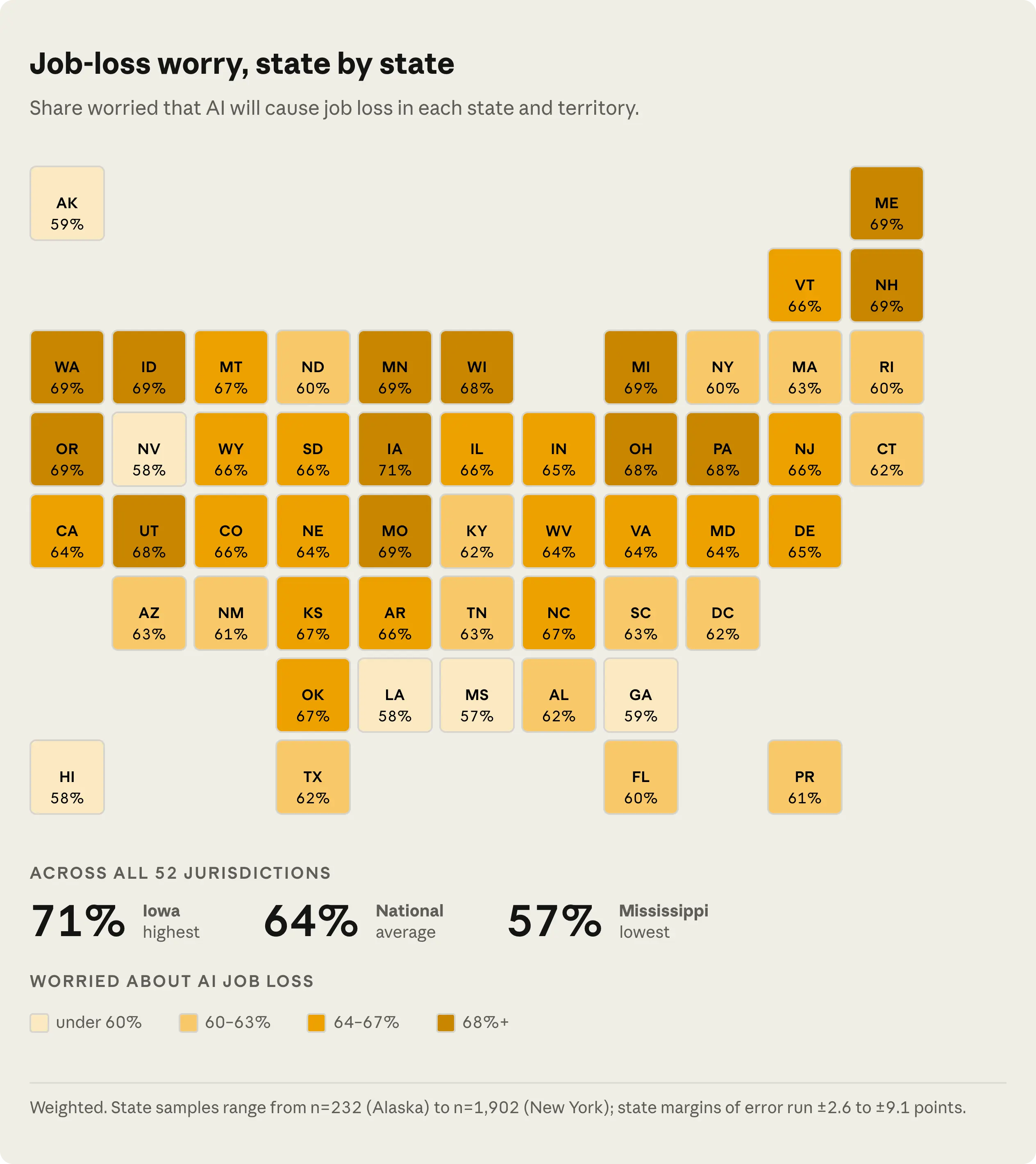
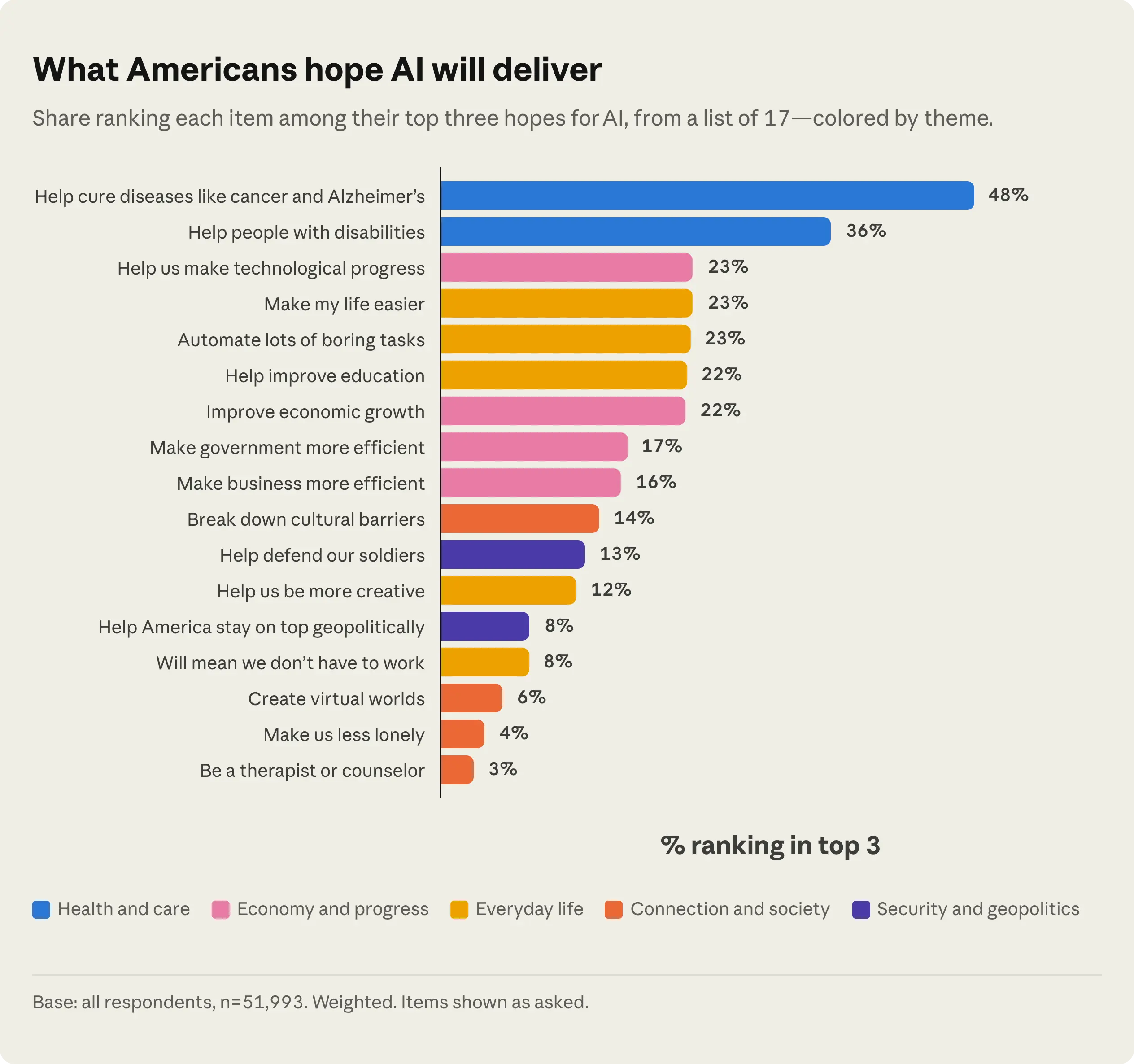
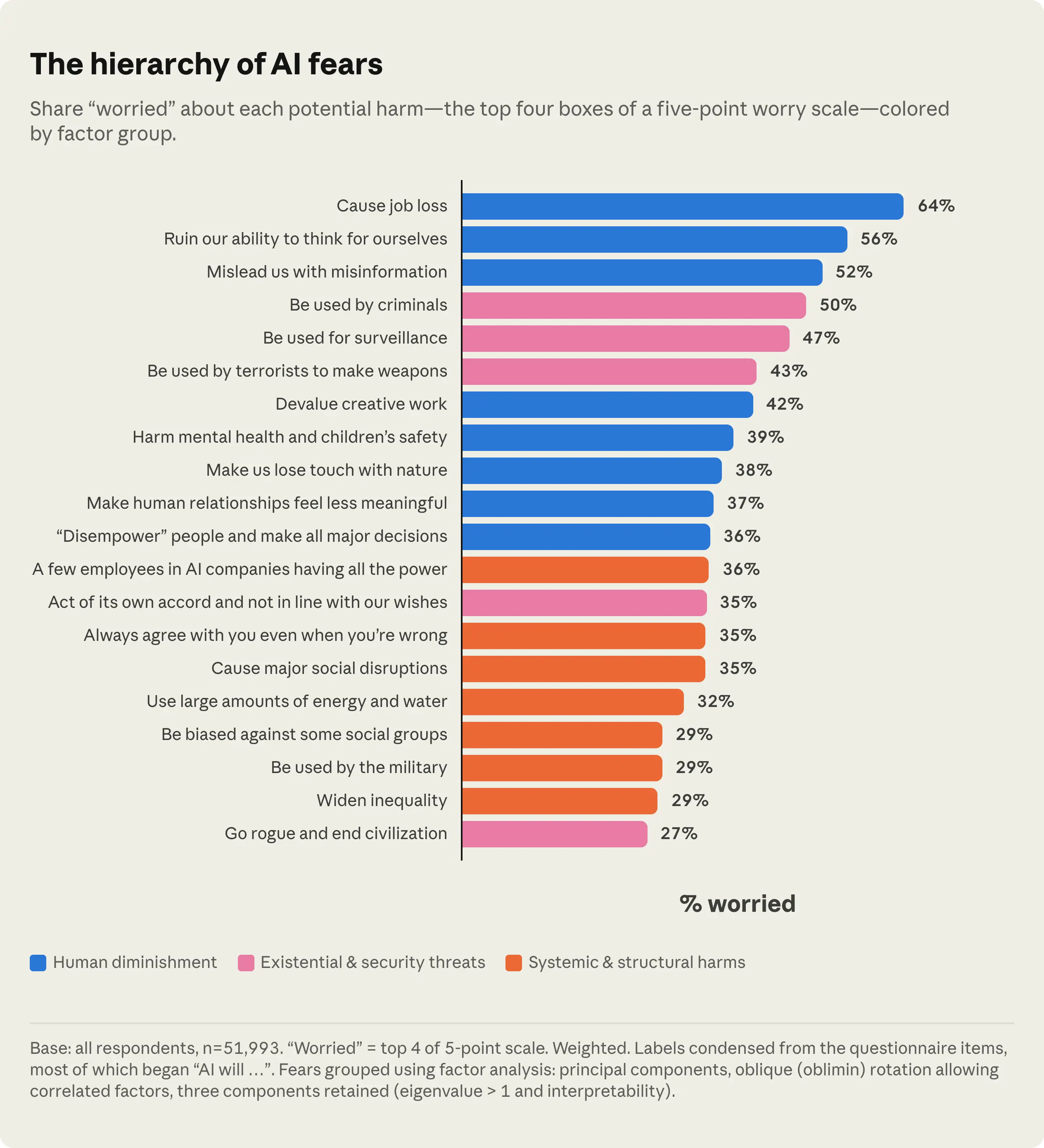
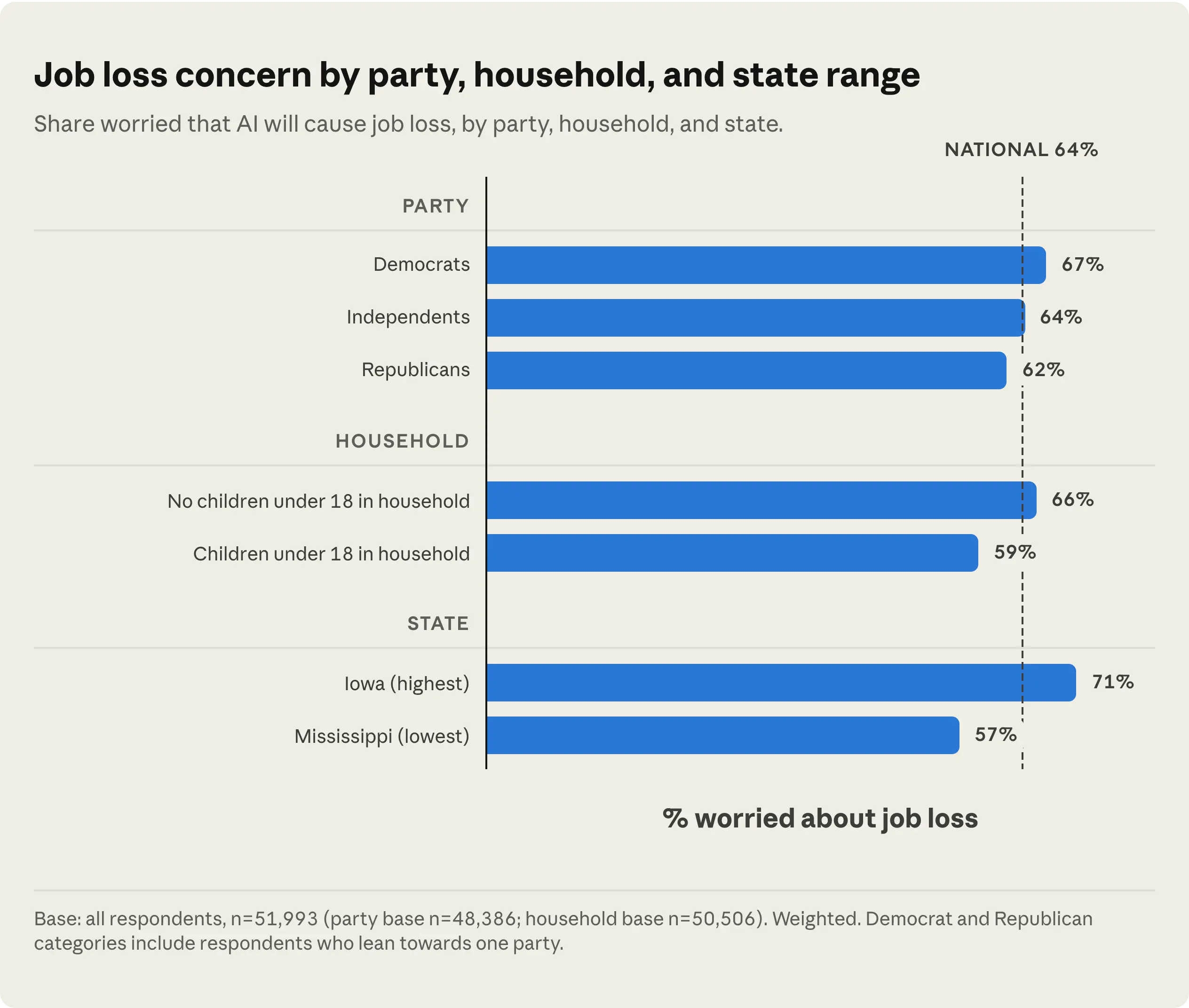
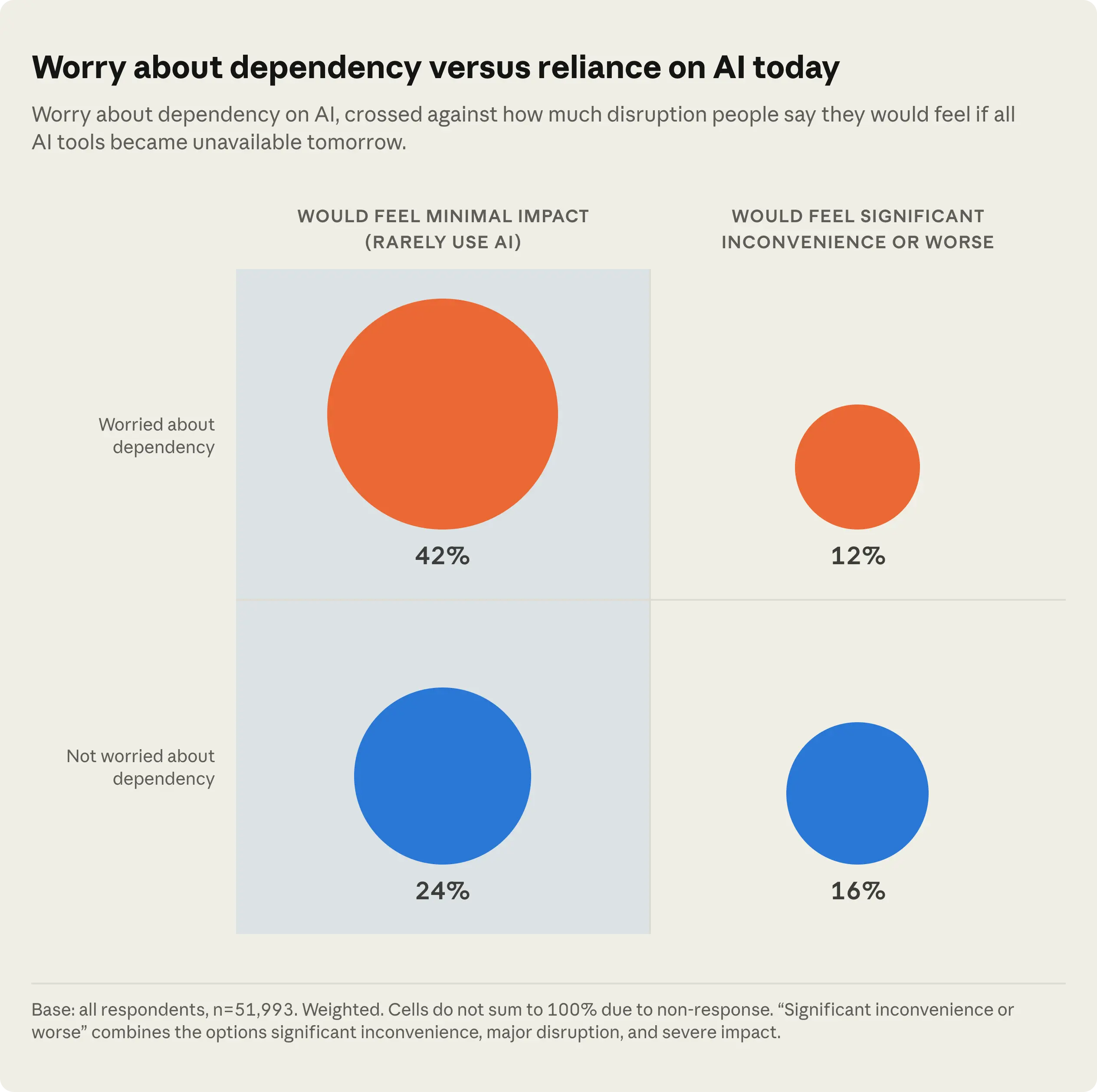
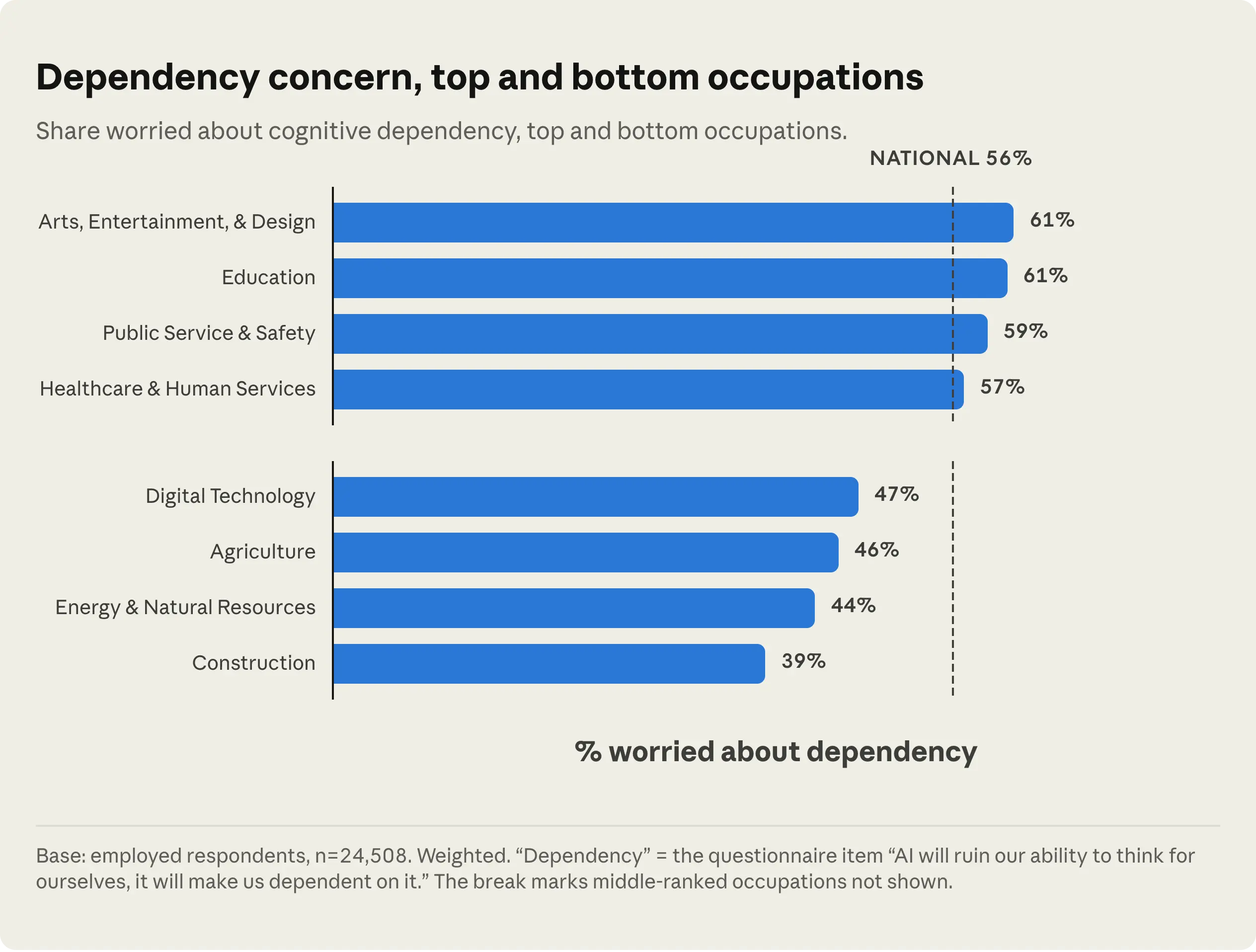
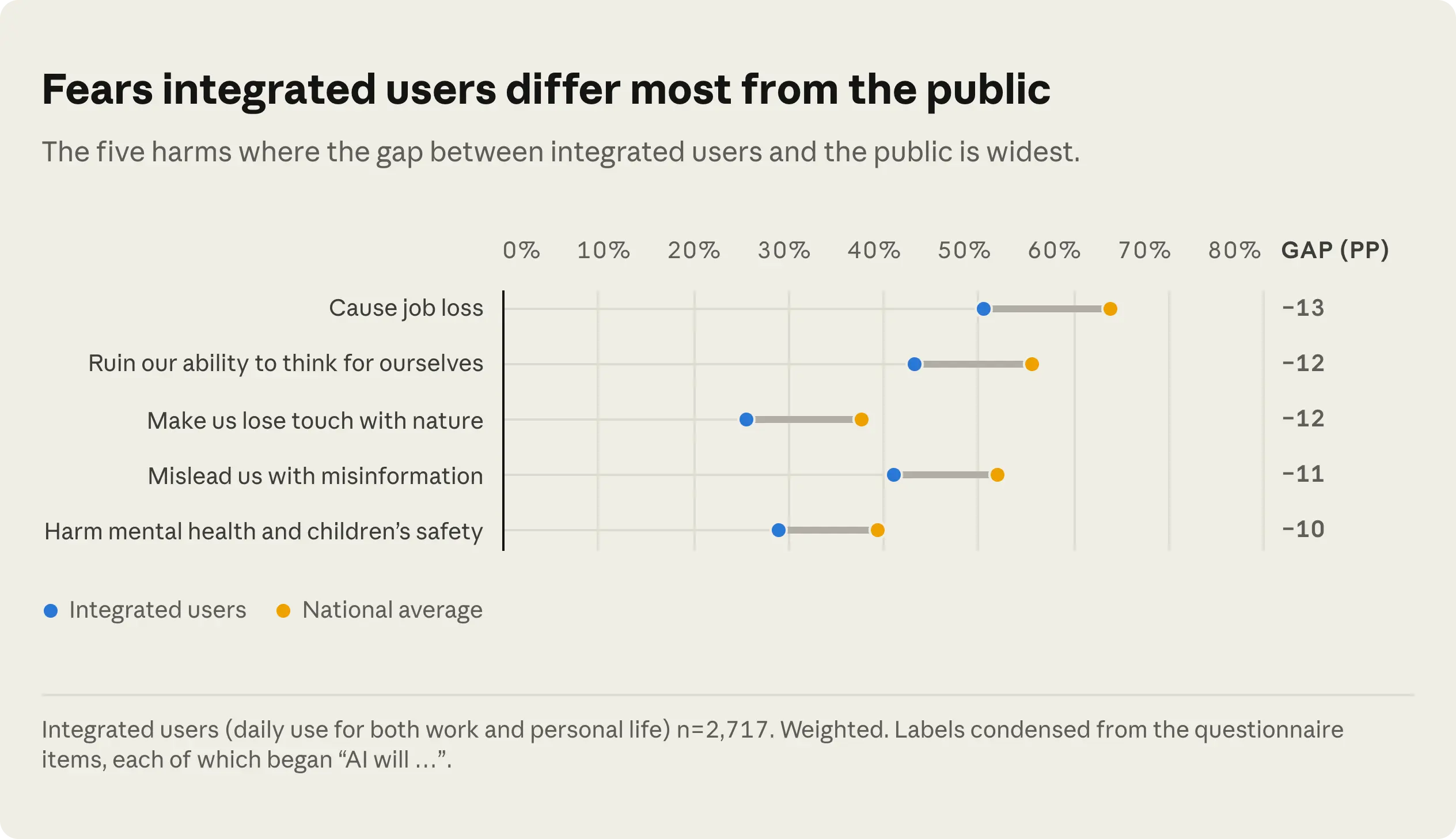
Anthropic released results from its inaugural Public Record survey, a nationally representative study of 51,993 Americans conducted in November and December of 2025 through YouGov and weighted to U.S. Census benchmarks. The survey represents Anthropic's first systematic effort to gauge public opinion among the general American population—including non-users of AI—rather than drawing solely on data from existing Claude users. Key findings reveal that Americans hold a fundamentally hopeful but anxious relationship with artificial intelligence: nearly half (48%) identified curing diseases like cancer or Alzheimer's as a top-three hope for AI, while 64% named job displacement as their foremost fear, making it the single most common concern across every state surveyed. Cognitive dependency—the fear that AI integration may erode people's capacity for independent thought—ranked second at 56%, followed by misinformation at 52%.
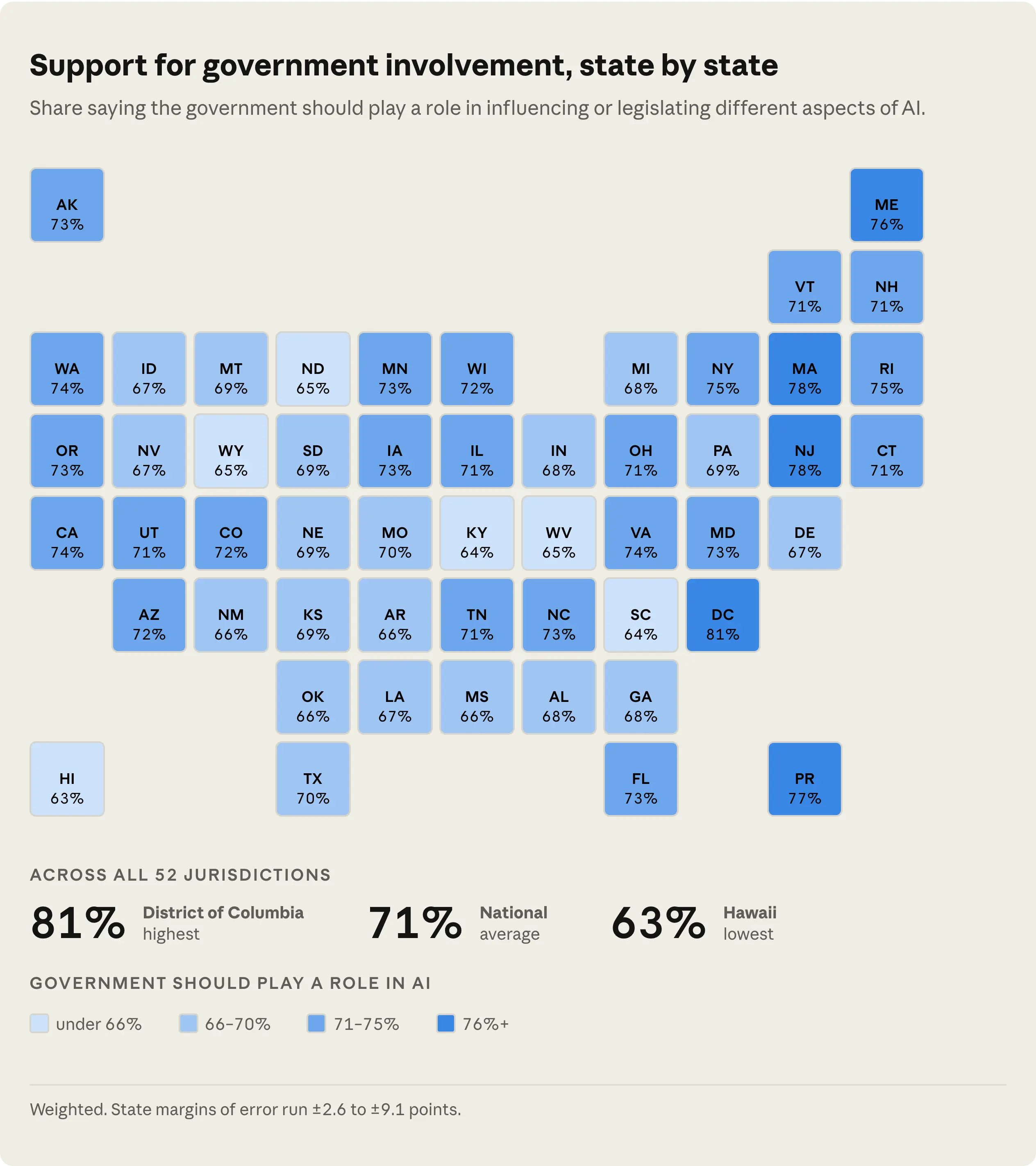
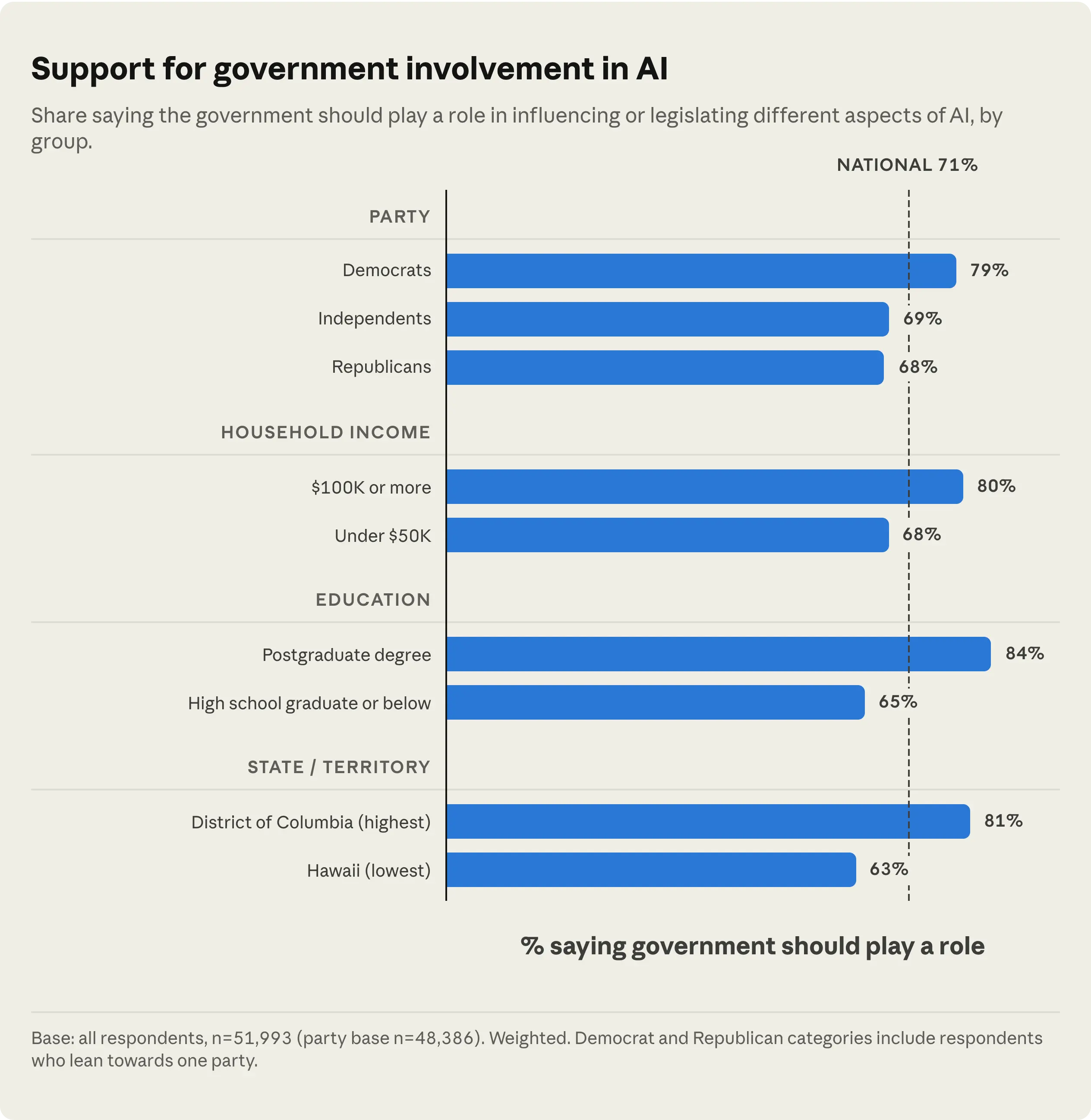
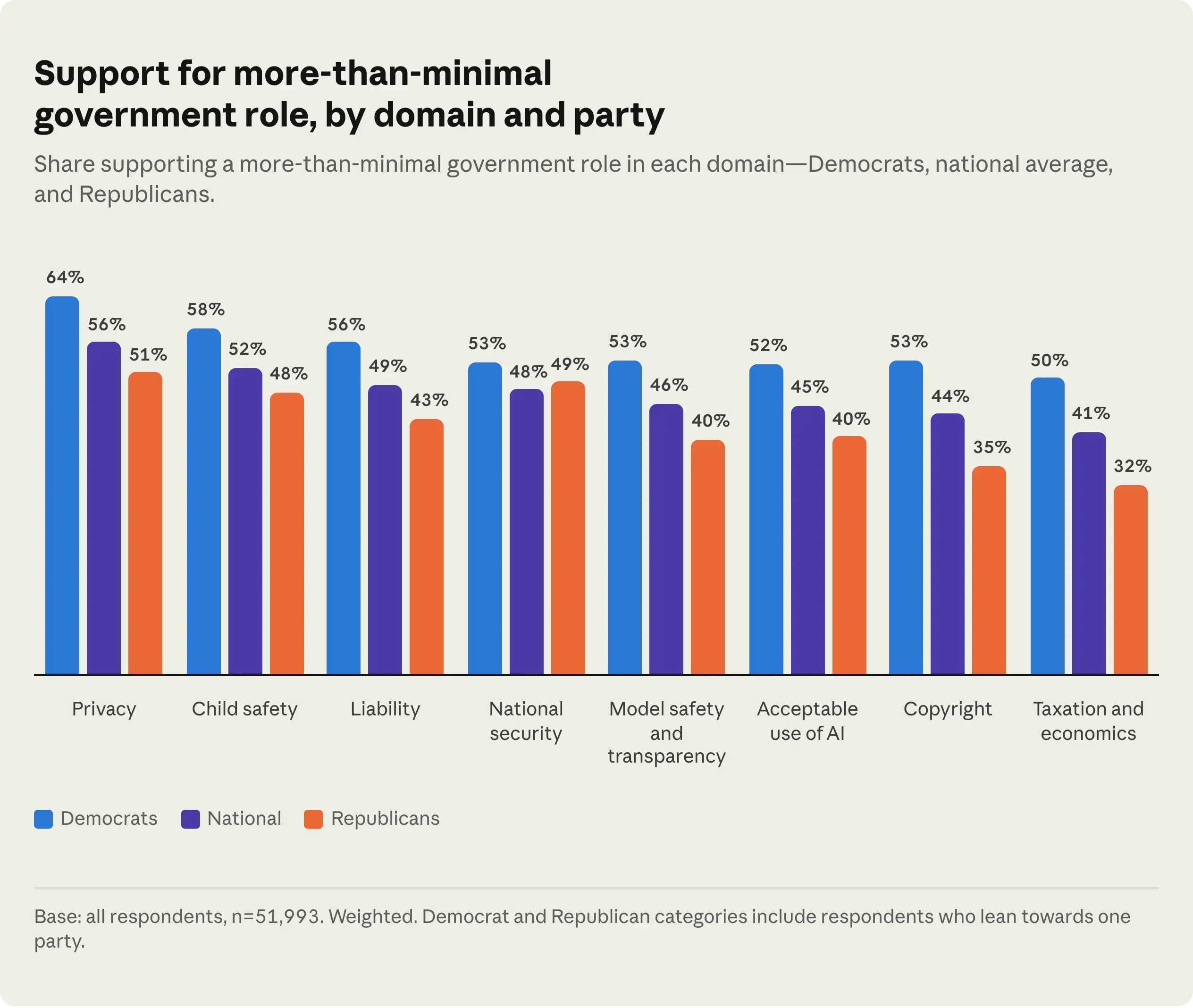
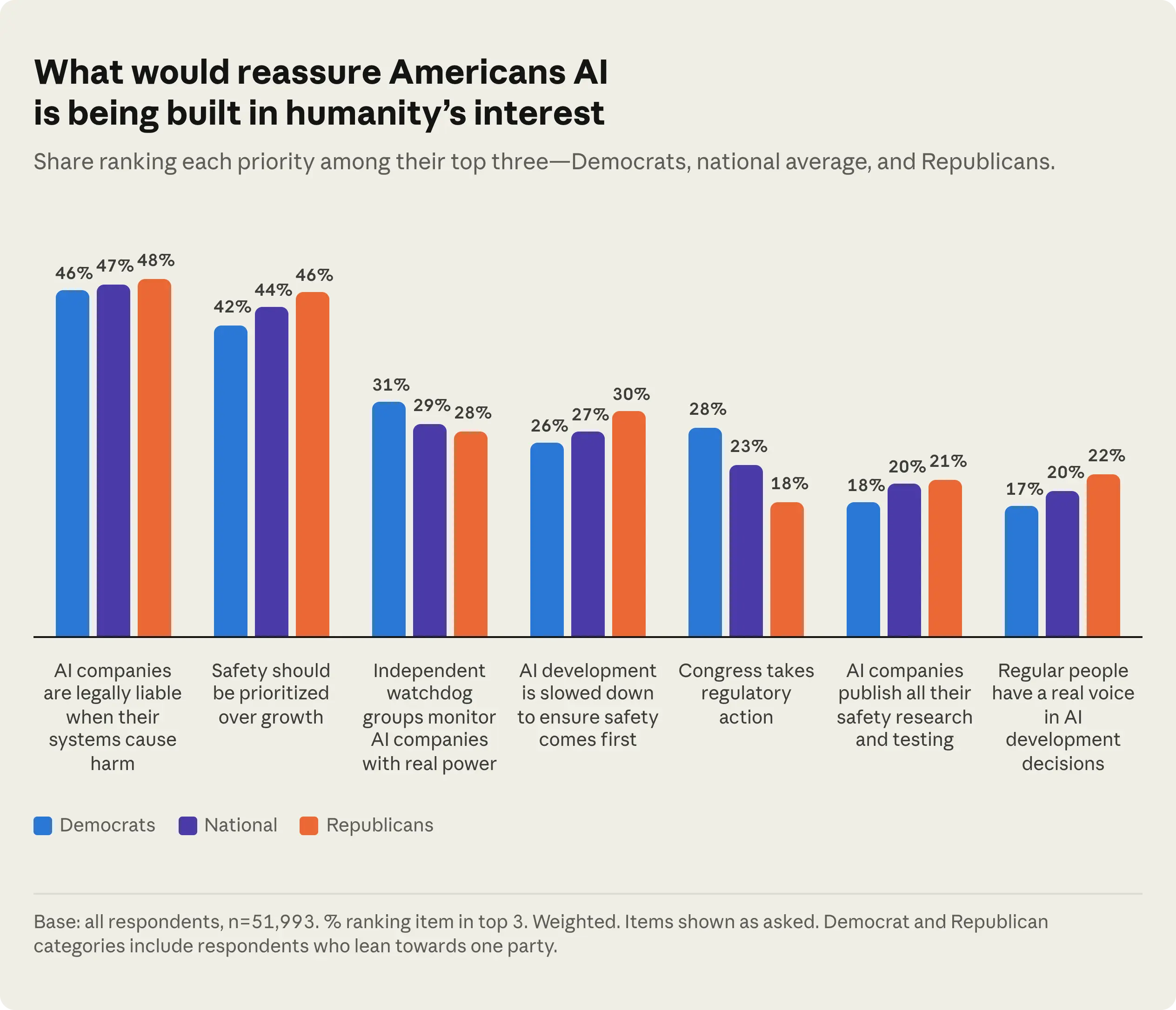
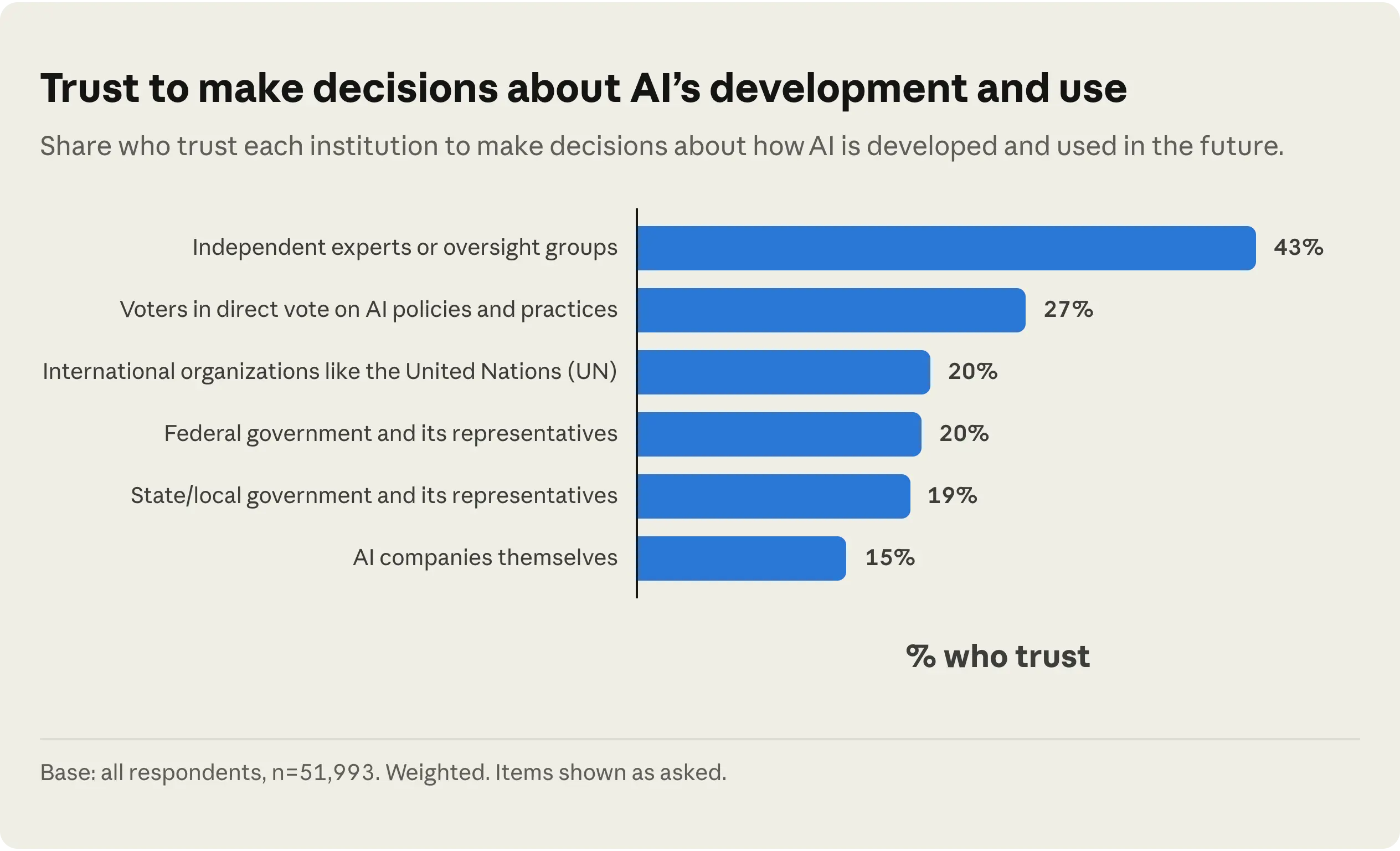
The survey's findings on regulation and accountability carry significant weight for the policy landscape. Over 70% of respondents expressed support for government intervention in AI development, with that sentiment distributed across partisan lines, suggesting that AI governance is one of the few contemporary policy domains that does not fracture sharply along traditional political fault lines. Americans were most focused on governmental action in areas of privacy (56%), child safety (52%), and liability for harm (49%). When asked what would most benefit humanity, respondents ranked holding AI companies legally liable for harm (47%) and prioritizing safety over growth (44%) as the highest-leverage interventions. Strikingly, only 15% of Americans reported trusting AI companies to self-regulate decisions about how AI is developed and deployed—a finding that poses a direct challenge to industry-led governance frameworks and underscores the scale of the public trust deficit facing Anthropic and its peers.
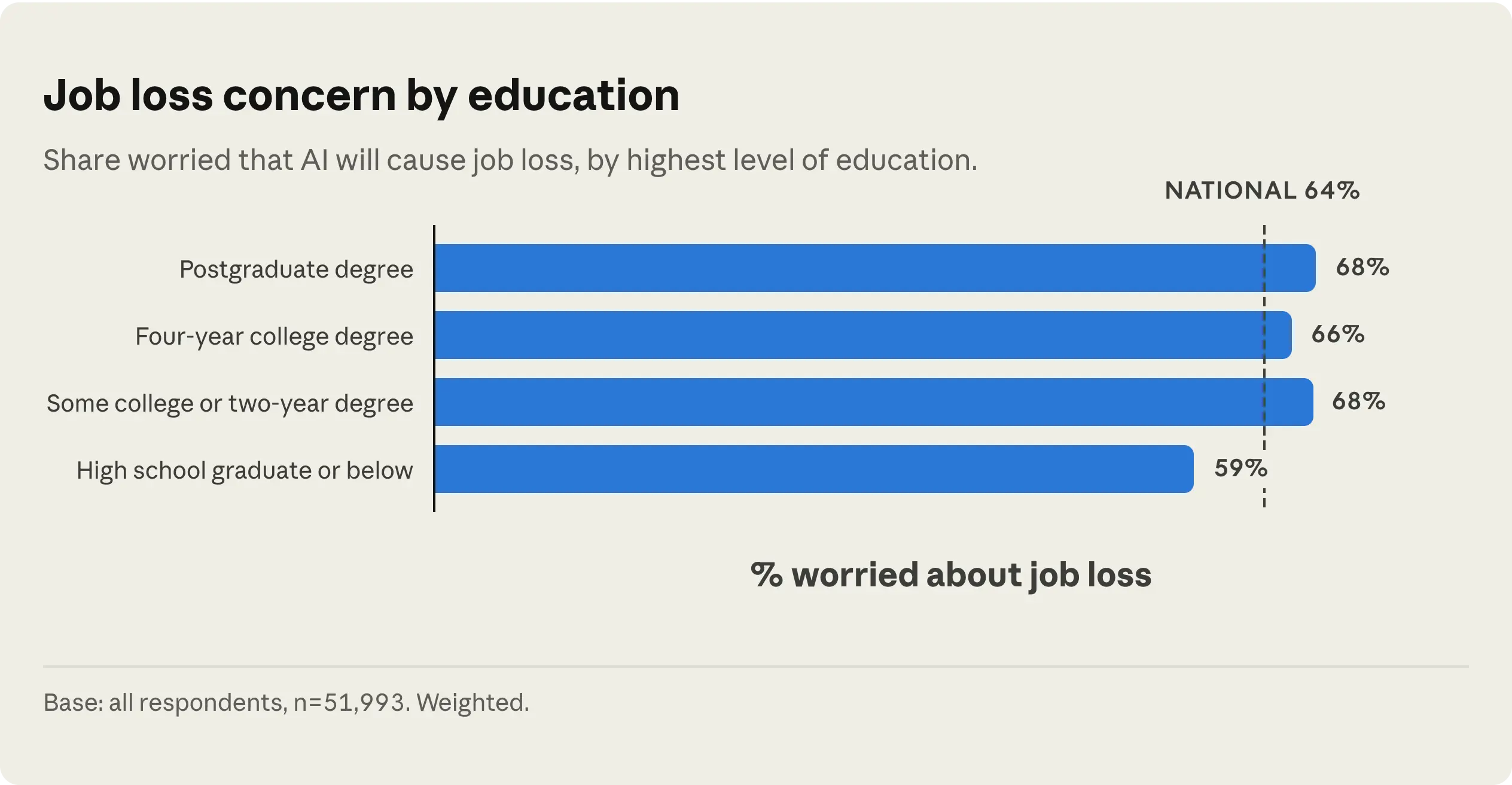
The demographic patterns embedded in the data add analytical nuance to headline statistics. Concern about job displacement increases with educational attainment, with postgraduate-degree holders roughly 10 percentage points more worried than those with a high school education or less. This counterintuitive result aligns with labor market research suggesting that AI's current capabilities most directly overlap with knowledge-work tasks performed by higher-educated workers, rather than manual or trade labor. Fears about AI, more broadly, tend to cluster around near-term and historically precedented harms—job automation, cognitive dependency, misinformation, surveillance—rather than longer-horizon existential risks like AI misalignment or "rogue" systems. This pattern suggests that public risk perception is anchored to lived technological experience rather than speculative scenarios prominent in AI safety discourse.
The Public Record survey is positioned by Anthropic as one component of a broader research infrastructure for understanding AI's societal footprint. It complements the Anthropic Economic Index, which draws on anonymized Claude usage data to map how AI is being employed globally, and the Anthropic Interviewer platform, through which the company conducted a qualitative study of 81,000 Claude users. The convergence of job loss and cognitive dependency as top concerns across both the general public survey and the Claude-user qualitative study is notable, suggesting these anxieties are not simply the product of unfamiliarity with AI but persist even among active users. The survey is intended to be repeated regularly and will expand internationally in future waves, allowing Anthropic to track shifts in public sentiment as model capabilities advance and cultural familiarity with AI deepens.
The release of this data carries strategic as well as informational dimensions. By publishing granular public opinion research—including findings that reflect low trust in AI companies—Anthropic signals a commitment to transparency at a moment when scrutiny of the AI industry from regulators, civil society, and the press is intensifying. The survey's emphasis on accountability mechanisms preferred by the public, such as legal liability and safety prioritization, effectively maps the terrain on which future regulatory negotiations will take place. As AI capabilities continue to advance and adoption widens, longitudinal data of this kind will become an increasingly important resource for policymakers, researchers, and the industry itself in assessing whether public confidence in AI institutions is growing or eroding.

 Read original article →